
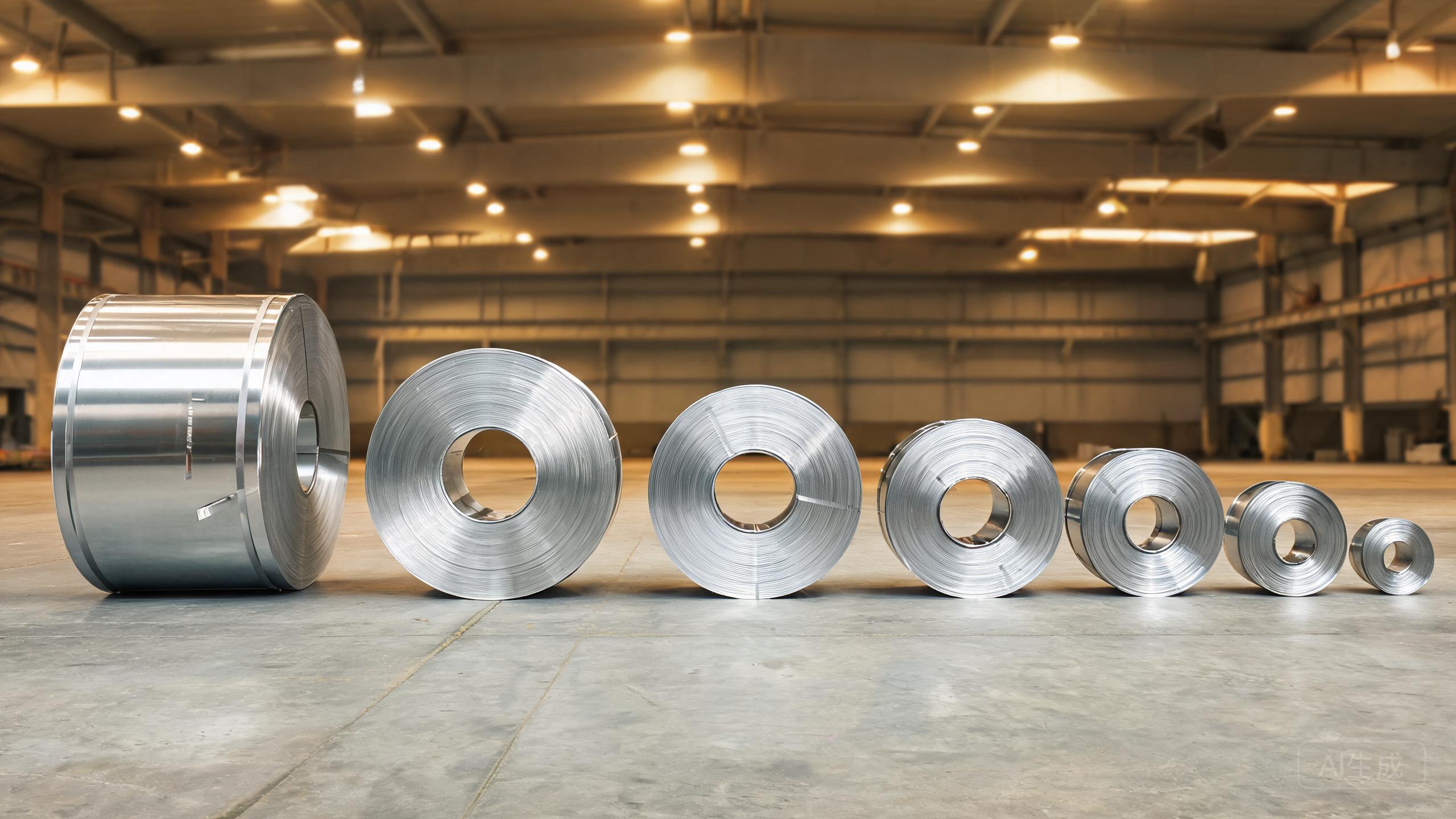
Short answer — Below 0.2 mm, ultra-thin 304 strip pricing factors drive a 50–400% premium over standard 2 mm sheet. Six cost drivers explain the gap: multi-pass cold rolling (15+ passes on twenty-high mills), intermediate and bright annealing cycles, precision thickness tolerance (±0.003 mm), surface finish (BA mirror commands 50%+ premium), low production yield (thin gauges have higher scrap rates), and limited supplier base (few mills can produce below 0.1 mm). Buyers can reduce cost by ordering wider coils, accepting standard tolerance, and consolidating volume.
This guide is written for stainless steel buyers, sourcing teams, engineers and product manufacturers. The purpose is not to declare one universal winner, but to turn a broad material question into a specification that a mill or service center can quote, process and inspect consistently.
Quick Comparison
| Thickness | Indicative price (CN, 2026) | Premium vs 1 mm sheet | Key cost driver |
|---|---|---|---|
| 1.0 mm 2B | ~13,600 CNY/ton | Baseline | Standard cold rolling |
| 0.3 mm 2B | ~20,000–25,000 CNY/ton | +50–80% | Additional rolling passes |
| 0.1 mm 2B | ~35,000–45,000 CNY/ton | +160–230% | Precision rolling + annealing |
| 0.05 mm BA | ~78,900 CNY/ton | +480% | Twenty-high mill + bright annealing |
| 0.1 mm Ni-plated | ~42,000 CNY/ton | +210% | Plating + battery-grade QC |
Prices are indicative for reference only. Actual quotes vary with nickel index, order volume, tolerance and surface requirements.
The table is a starting point. Actual performance depends on the governing standard, delivered condition, dimensions, surface finish, fabrication route and service environment. Commercial names should never replace a complete purchase specification.
What Buyers Should Evaluate
- Thickness vs cost curve: Price rises exponentially below 0.2 mm. Each halving of thickness roughly doubles the price per ton, because rolling passes multiply and yield drops. Evaluate whether your design truly needs 0.05 mm or whether 0.1 mm suffices — the cost difference can be 2–3×.
- Tolerance grade: Precision tolerance (±0.003 mm) costs 20–30% more than standard (±0.005 mm). Only specify precision when your tooling or product function demands it — many applications work fine at ±0.005 mm.
- Surface finish premium: BA (bright annealed) mirror finish commands a 40–60% premium over 2B. Electropolished medical-grade surface (Ra ≤0.02 µm) adds even more. Specify BA only when the application requires mirror reflectivity or cleanroom cleanliness.
- Order width and volume: Wider coils (500–1250 mm) cost less per kilogram than narrow slit strip (3–20 mm), because slitting adds a separate step with its own yield loss. If you can slit in-house or accept wider strip, negotiate lower base material cost.
- Supplier capability: Below 0.1 mm, the supplier pool narrows to a handful of mills (TISCO, Yongjin, Baosteel and a few precision strip specialists). Lead times extend to 4–6 weeks. Plan procurement early and consider dual-sourcing.
- Nickel index exposure: 304 contains 8–10.5% nickel. A 100 CNY/ton move in nickel translates to roughly 120 CNY/ton in 304 cost. For large orders, consider locking price via the Shanghai Stainless Electronic Trading Center or similar futures mechanism.
For production orders, share the end use rather than requesting a grade or finish in isolation. A supplier can then review corrosion exposure, forming severity, welding, visual requirements and packing before material is cut. This early review is usually less expensive than correcting a rejected shipment or unstable production trial.
Common Purchasing Mistakes
- Specifying 0.05 mm BA mirror strip when 0.1 mm 2B would meet the functional requirement — overpaying 3–4× for unnecessary thinness and surface quality
- Accepting a supplier’s first quote without comparing tolerance grade — the supplier may quote precision (±0.003 mm) when standard (±0.005 mm) is acceptable, adding 20–30% to the price
- Not factoring in nickel price volatility — a quote valid for 3 days may change by 5–10% if nickel moves on the LME
- Ordering narrow slit strip (5 mm) when wider coil (100 mm) can be slit in-house — paying a 30–50% premium for slitting service
Verification: Compare at least three quotes with identical specifications (grade, thickness, tolerance, surface, temper, width, volume). Check the nickel index on the quote date. Verify the supplier’s actual capability — ask for production records or sample coils at the specified thickness. Require EN 10204 3.1 MTC and verify Ni content by PMI.
Recommended RFQ Wording
Specify: grade (304 / UNS S30400), nominal thickness, tolerance grade (precision ±0.003 mm or standard ±0.005 mm per ASTM A240), temper, surface finish (2B / BA / electropolished), width (coil or slit), coil dimensions, protective film, order quantity and annual volume, delivery destination and required date, and price validity period (account for nickel index).
Also include order quantity, acceptable quantity variation, destination, required delivery date and whether partial shipments are allowed. If a requirement is critical, make it measurable and place it on the purchase order rather than only in an email conversation.
How Still Steel Supports the Project
Still Steel supplies stainless steel coil, strip and sheet and provides slitting, cut-to-length, brushing, polishing and protective-film services. We can compare available mill material with your drawing, prepare trial quantities and preserve heat-number traceability through service-center processing.
Send the grade, dimensions, annual volume and application to vip@still-steel.com, or discuss the requirement on WhatsApp, or request a quote online.
Frequently Asked Questions
Why does 0.05 mm 304 strip cost so much more than 1 mm sheet?
Producing 0.05 mm strip requires 15+ cold-rolling passes on a twenty-high mill, intermediate bright annealing cycles, precision slitting and tight ±0.003 mm tolerance control. Each step adds cost, and yield loss is far higher than for standard sheet.
How can I reduce the cost of ultra-thin 304 strip?
Order wider coils and slit in-house, accept standard ±0.005 mm tolerance instead of precision grade, use 2B surface instead of BA mirror, and consolidate annual volume into fewer, larger orders to reduce setup and freight cost per kilogram.
Is 0.1 mm 304 strip a good substitute for 0.05 mm?
Only if your tooling and product design can accept the thicker gauge. Switching from 0.05 mm to 0.1 mm doubles the material weight per part and may require retooling. Validate with a stamping trial before committing to bulk production.
Technical References
- ASTM A240/A240M stainless steel sheet and strip
- ASTM A666 work-hardened stainless strip temper
- EN 10204 3.1 mill test certificate
Reference documents support general selection and fabrication principles. The final material decision must follow the applicable contract, standard, regulation and engineering review for the specific product.