
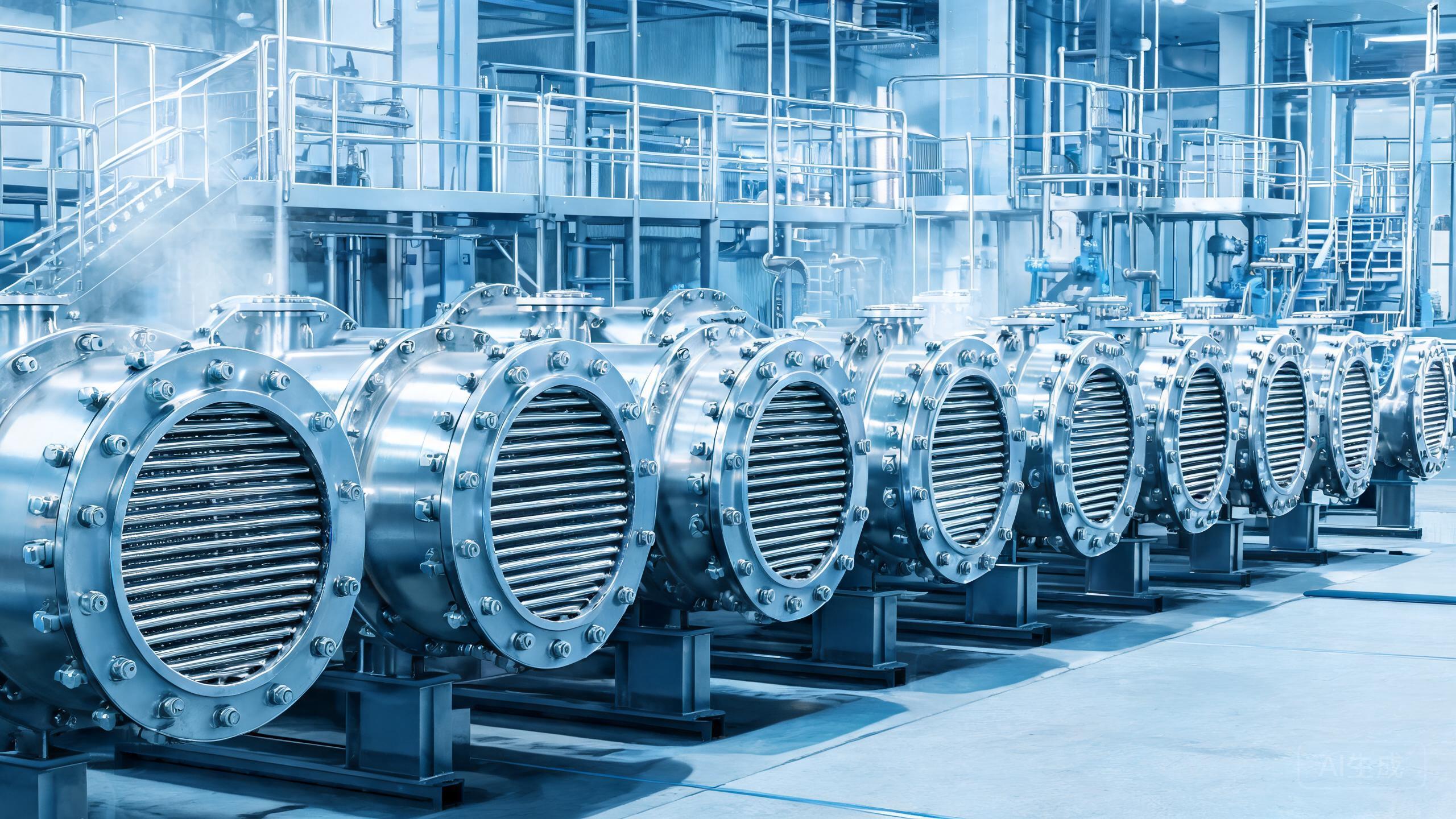
Short answer: Heat exchangers create hot, crevice-prone, chloride-rich environments that accelerate corrosion. 304L works for clean, low-chloride water and process duties; 316L is the default industrial choice for cooling water and brackish service; duplex 2205 and super austenitic alloys are used when seawater, brine or higher pressures demand more resistance. Purchasers should tie the grade selection to actual water chemistry, duty temperature and cleaning cycles.
This guide is written for stainless steel buyers, sourcing teams, engineers and product manufacturers. The purpose is not to declare one universal winner, but to turn a broad material question into a specification that a mill or service center can quote, process and inspect consistently.
Quick Comparison
| Option | Key point | Typical use or decision |
|---|---|---|
| 304L / 304 | Clean water, moderate temperature, low chloride | Steam heaters, closed-loop heating circuits |
| 316L / 316 | Molybdenum-alloyed, chloride-tolerant | Cooling towers, food process, general exchangers |
| Duplex 2205 / 2507 | Higher strength + PREN | Seawater, brine, high-pressure service |
| Super austenitic 904L / 254 SMO | Very high corrosion resistance | Concentrated acids, aggressive brines |
The table is a starting point. Actual performance depends on the governing standard, delivered condition, dimensions, surface finish, fabrication route and service environment. Commercial names should never replace a complete purchase specification.
What Buyers Should Evaluate
- Request the water or process chemistry analysis, not a verbal description, and calculate or estimate the PREN requirement.
- Specify solution annealing and quenching for plate packs or tubes where residual stress could assist cracking.
- Require eddy-current, hydrostatic or pressure-test certificates per the exchanger code (TEMA, ASME VIII, PED, etc.).
For production orders, share the end use rather than requesting a grade or finish in isolation. A supplier can then review corrosion exposure, forming severity, welding, visual requirements and packing before material is cut. This early review is usually less expensive than correcting a rejected shipment or unstable production trial.
Common Purchasing Mistakes
- Selecting a grade on air temperature without considering localised tube-wall temperature under scaling
- Ignoring crevice risk at gaskets, tube sheets and plate-pack contact points
- Forgetting to specify post-fabrication passivation and cleanliness verification
These mistakes are avoidable when drawings, approved samples, inspection methods and certificate requirements are agreed before production. For visual products, retain a signed master sample. For functional dimensions, define where and how measurements will be taken.
Recommended RFQ Wording
Quote the grade with UNS number, product form (tube, plate, foil), gauge or wall thickness, delivery condition, applicable test (hydraulic, eddy current, corrosion test), code of construction, and any additional material qualifications such as HIC or SSC resistance if sour service is involved.
Also include order quantity, acceptable quantity variation, destination, required delivery date and whether partial shipments are allowed. If a requirement is critical, make it measurable and place it on the purchase order rather than only in an email conversation.
How Still Steel Supports the Project
Still Steel supplies stainless steel coil, strip and sheet and provides slitting, cut-to-length, brushing, polishing and protective-film services. We can compare available mill material with your drawing, prepare trial quantities and preserve heat-number traceability through service-center processing.
Send the grade, dimensions, annual volume and application to vip@still-steel.com, or discuss the requirement on WhatsApp.
Frequently Asked Questions
Why is 316L preferred over 304L for cooling water with chloride?
Molybdenum in 316L raises resistance to chloride pitting and crevice corrosion, which are common failure modes in heat-exchanger crevices and under deposits.
When should I consider duplex 2205 instead of 316L?
Switch to duplex when pressure or weight savings justify the higher grade, or when chloride content or temperature pushes 316L beyond its safe envelope.
Can I save cost by using 201 instead of 304 in a heat exchanger?
Not recommended. Heat exchangers combine temperature, chloride and crevice effects; 201 does not provide a reliable corrosion margin for most service conditions.
Technical References
Reference documents support general selection and fabrication principles. The final material decision must follow the applicable contract, standard, regulation and engineering review for the specific product.