
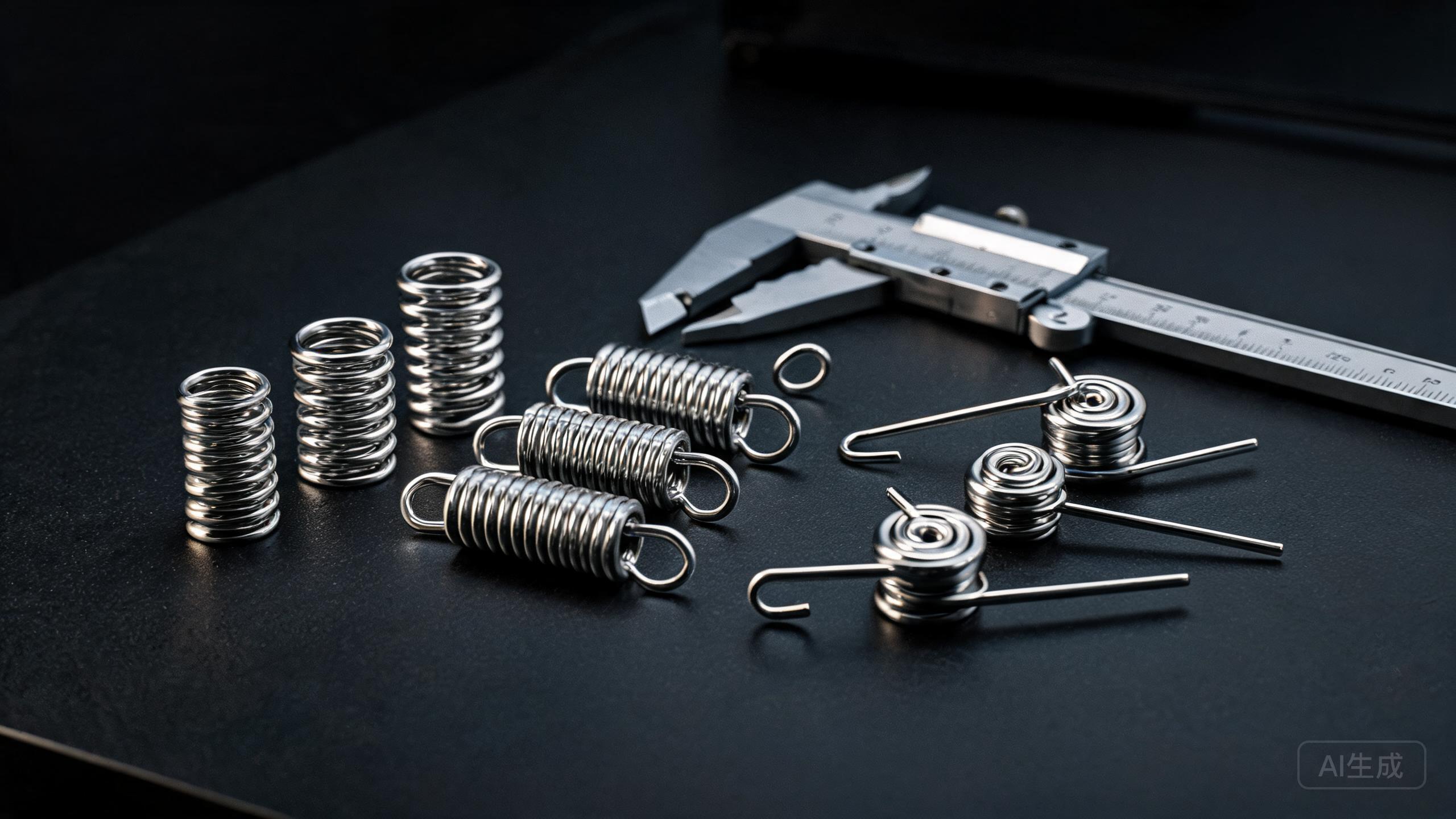
Short answer: Stainless springs are selected by strength, environment and fatigue load: 301 is the workhorse for high-strength compression, extension and torsion springs in moderate service; 302 covers standard springs; 316 adds corrosion resistance for marine or outdoor use; and 631 (17-7PH) serves high-temperature or extra-creep-resistant applications. Purchasers should lock in temper class, tensile band and post-forming stress relief, because spring performance depends far more on temper than on alloy name alone.
This guide is written for stainless steel buyers, sourcing teams, engineers and product manufacturers. The purpose is not to declare one universal winner, but to turn a broad material question into a specification that a mill or service center can quote, process and inspect consistently.
Quick Comparison
| Option | Key point | Typical use or decision |
|---|---|---|
| 301 spring-temper wire/strip | Highest cold-worked tensile, cost-effective | Compression, torsion and flat springs, clips, connectors |
| 302 / 304 spring temper | Standard grade, widely available | Valves, retainers, moderate-load general springs |
| 316 / 316L spring temper | Molybdenum-bearing for salt exposure | Marine valves, outdoor equipment, medical devices |
| 631 / 17-7PH (CH900 / RH950) | Precipitation hardening, higher modulus/temp | Aerospace, high-temp actuators, flat springs |
The table is a starting point. Actual performance depends on the governing standard, delivered condition, dimensions, surface finish, fabrication route and service environment. Commercial names should never replace a complete purchase specification.
What Buyers Should Evaluate
- Specify the exact temper code (e.g. AMS 5519 / ASTM A313 Condition A or full-hard, or 17-7PH CH900).
- State the required fatigue life (cycles) and test method, because surface defects and cleanliness control life in high-cycle applications.
- For stamped/flat springs, define grain direction and strip quality (edge-conditioned vs as-slit) because the edge is a fatigue-initiation site.
For production orders, share the end use rather than requesting a grade or finish in isolation. A supplier can then review corrosion exposure, forming severity, welding, visual requirements and packing before material is cut. This early review is usually less expensive than correcting a rejected shipment or unstable production trial.
Common Purchasing Mistakes
- Buying “stainless spring wire” without a temper, then finding every batch has a different load-deflection curve
- Running 301 springs above their stress-relaxation temperature and seeing set/loss of preload in a few months
- Expecting 316 spring wires to match 301 tensile level; mis-sizing the spring and failing the load specification
These mistakes are avoidable when drawings, approved samples, inspection methods and certificate requirements are agreed before production. For visual products, retain a signed master sample. For functional dimensions, define where and how measurements will be taken.
Recommended RFQ Wording
List alloy with UNS number, wire/strip dimensional standard, temper/condition and tensile range, post-forming stress-relief or aging, spring-end treatment (ground, closed, hooks), load-deflection acceptance points, fatigue test or salt-spray requirement, and packaging to prevent tangling or surface damage.
Also include order quantity, acceptable quantity variation, destination, required delivery date and whether partial shipments are allowed. If a requirement is critical, make it measurable and place it on the purchase order rather than only in an email conversation.
How Still Steel Supports the Project
Still Steel supplies stainless steel coil, strip and sheet and provides slitting, cut-to-length, brushing, polishing and protective-film services. We can compare available mill material with your drawing, prepare trial quantities and preserve heat-number traceability through service-center processing.
Send the grade, dimensions, annual volume and application to vip@still-steel.com, or discuss the requirement on WhatsApp.
Frequently Asked Questions
Why is 301 the default choice for high-strength springs?
301 can be cold worked to very high tensile (2000+ MPa for fine wire) while retaining a useful ductility margin, giving a combination of fatigue life and load per unit size that is hard to beat with other common 300-series grades.
Should I choose 316 springs for the coast?
Yes, when the spring sees salt, condensation and occasional immersion. Keep in mind that cold-drawn 316 spring tempers deliver lower tensile than 301, so the working stress design must be adjusted.
What stress-relief should I specify after forming?
Typical low-temperature stress relief for cold-formed 300-series springs runs 1–2 hours around 280–350 °C. 17-7PH / 631 uses a precipitation-hardening step. State the post-forming heat treatment explicitly to avoid relaxation failures.
Technical References
Reference documents support general selection and fabrication principles. The final material decision must follow the applicable contract, standard, regulation and engineering review for the specific product.