
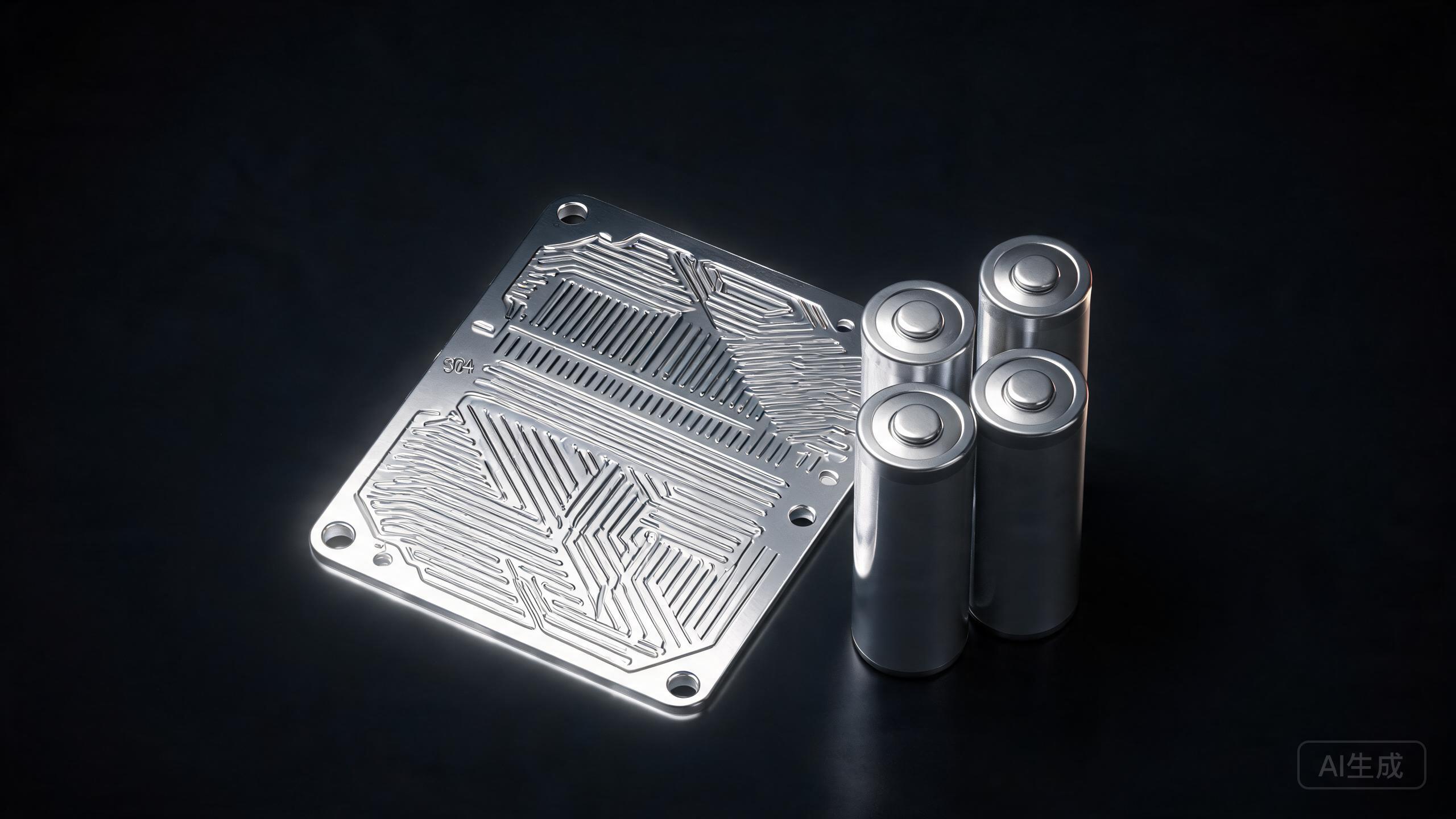
Short answer — Sourcing 304 stainless for battery tabs and bipolar plates means specifying nickel-plated 304 stainless steel strip at 0.1–0.2 mm — the industry standard for lithium-battery tabs, cases and fuel-cell metallic bipolar plates. The nickel plating (2–5 µm) boosts conductivity and resists electrolyte corrosion 5× better than bare or zinc-coated steel. For fuel-cell bipolar plates, 0.1 mm SS304 can be stamped into micro-channel geometries with side-boss heights up to 0.75 mm. Buyers should specify plating thickness, temper, thickness tolerance and stamping formability to avoid cracking and conductivity failures.
This guide is written for stainless steel buyers, sourcing teams, engineers and product manufacturers. The purpose is not to declare one universal winner, but to turn a broad material question into a specification that a mill or service center can quote, process and inspect consistently.
Quick Comparison
| Application | Grade and thickness | Key property | Why it works |
|---|---|---|---|
| Battery tabs | 304 Ni-plated, 0.1–0.15 mm | Conductivity + electrolyte corrosion resistance | Ni layer (2–5 µm) resists battery electrolyte 5× vs zinc-coated |
| Battery cases | 304 Ni-plated, 0.15–0.2 mm | Formability + corrosion + weight reduction | 15% lighter than zinc-coated steel; compatible with 800 V platforms |
| Fuel-cell bipolar plates | 304, 0.1 mm | Micro-channel stampability + conductivity | Stamped into channel geometry; cost far below graphite or titanium |
| Battery connectors | 304 or 316L, 0.1–0.2 mm | Spring temper + corrosion resistance | 3/4 hard temper for contact force; 316L for humid cell environments |
The table is a starting point. Actual performance depends on the governing standard, delivered condition, dimensions, surface finish, fabrication route and service environment. Commercial names should never replace a complete purchase specification.
What Buyers Should Evaluate
- Nickel plating specification: For battery tabs and cases, specify nickel plating thickness (2–5 µm), plating method (electroplated), and adhesion test requirement. Plating below 2 µm fails electrolyte immersion testing; plating above 5 µm adds unnecessary cost and can flake during stamping.
- Thickness tolerance: Battery tab thickness directly affects internal resistance. At 0.1 mm, specify ±0.003 mm tolerance to ensure consistent weld quality and current carrying capacity across production.
- Temper condition: Battery cases need annealed or 1/4H temper for deep drawing. Battery connectors and springs need 3/4 hard or full hard for contact force. Bipolar plates need annealed for maximum formability into channel geometry.
- Stamping formability for bipolar plates: Research on 0.1 mm SS304 bipolar plates shows maximum thinning of 17.7% at zero side-boss height, rising to 29.9% at 0.75 mm side-boss height. Channel corner cracking is the dominant failure mode — design corner radii ≥0.3 mm.
- Surface cleanliness: Battery and fuel-cell applications require extremely clean surfaces. Specify BA (bright annealed) finish and oil-free packaging. Residual rolling oil or drawing compound contaminates cell chemistry.
For production orders, share the end use rather than requesting a grade or finish in isolation. A supplier can then review corrosion exposure, forming severity, welding, visual requirements and packing before material is cut. This early review is usually less expensive than correcting a rejected shipment or unstable production trial.
Common Purchasing Mistakes
- Ordering bare 304 (no nickel plating) for battery tabs — the strip corrodes in electrolyte within weeks and cell internal resistance rises, causing premature failure
- Specifying 0.2 mm strip when the design was validated at 0.15 mm — the thicker strip increases cell weight and internal resistance, and may not fit the existing tooling
- Using annealed temper for battery connector springs — the formed contact has insufficient force and the connector loses connection under vibration
- Not verifying plating adhesion — cheap plating flakes off during stamping, contaminating the cell with nickel particles that cause internal shorts
Verification: Test plating adhesion by bending a sample 180° — plating should not flake or crack. Measure plating thickness by XRF (X-ray fluorescence). Verify base material Ni content by PMI (8–10.5% Ni for true 304). Require EN 10204 3.1 MTC with chemical analysis and plating certificate.
Recommended RFQ Wording
Specify: grade (304 / UNS S30400), thickness and tolerance (e.g. 0.1 mm ±0.003 mm per ASTM A240), temper (annealed for cases/plates, 3/4H for connectors), nickel plating (electroplated, 2–5 µm, adhesion per ASTM B4888), surface finish (BA oil-free), edge condition (precision-slit, deburred), coil dimensions, protective film (single-sided PE), application (battery tab / case / bipolar plate / connector), and annual volume.
Also include order quantity, acceptable quantity variation, destination, required delivery date and whether partial shipments are allowed. If a requirement is critical, make it measurable and place it on the purchase order rather than only in an email conversation.
How Still Steel Supports the Project
Still Steel supplies stainless steel coil, strip and sheet and provides slitting, cut-to-length, brushing, polishing and protective-film services. We can compare available mill material with your drawing, prepare trial quantities and preserve heat-number traceability through service-center processing.
Send the grade, dimensions, annual volume and application to vip@still-steel.com, or discuss the requirement on WhatsApp, or request a quote online.
Frequently Asked Questions
What stainless steel grade is used for lithium battery tabs?
Nickel-plated 304 strip at 0.1–0.15 mm is the standard for lithium-battery tabs. The nickel plating (2–5 µm) improves conductivity and resists electrolyte corrosion 5× better than bare 304 or zinc-coated steel.
Can 304 stainless steel be stamped into fuel-cell bipolar plates?
Yes. 0.1 mm SS304 is stampable into micro-channel bipolar plate geometries. Side-boss heights up to 0.75 mm are achievable with maximum thinning below 30%. Punch speed should stay at 200–500 mm/s to avoid cracking.
Should I use 316L instead of 304 for battery applications?
316L is chosen when the cell environment contains chlorides or aggressive electrolyte variants. For standard lithium-ion chemistries, nickel-plated 304 offers equivalent performance at lower cost and is the industry default.
Technical References
- ASTM A240/A240M stainless steel sheet and strip
- ASTM B488 electrodeposited nickel plating
- EN 10088-2 stainless steel strip technical conditions
Reference documents support general selection and fabrication principles. The final material decision must follow the applicable contract, standard, regulation and engineering review for the specific product.