
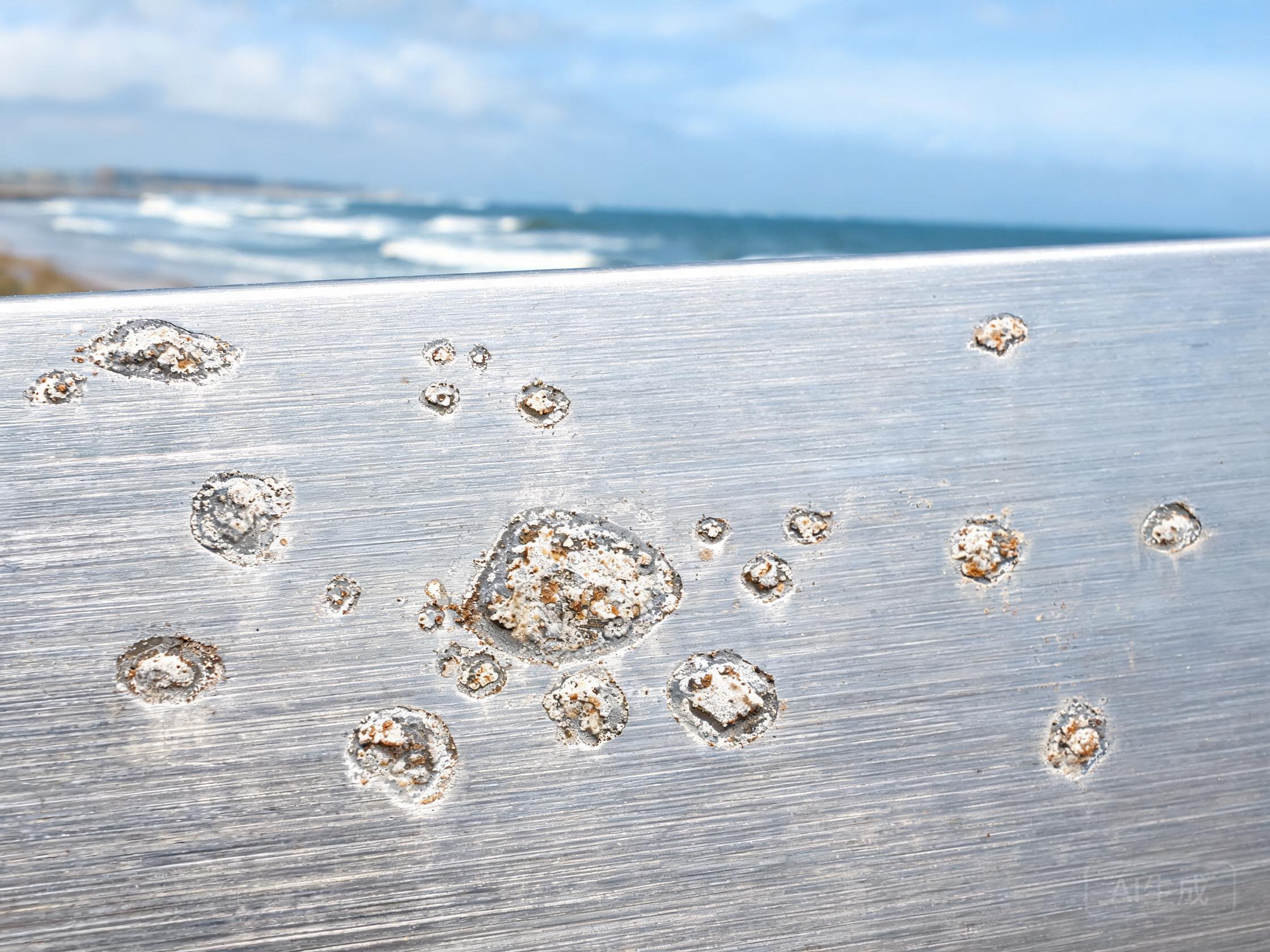
Short answer: Water spots on stainless steel are not cosmetic stains — they are incipient pitting corrosion waiting to happen. If you leave tap water or rainwater to dry on 304 or 316, the chloride concentrates as it evaporates and eats through the passive layer in weeks. The cure is simple: use DI water, or a spot-free final rinse, and dry the surface within minutes of contact.
Kitchen appliance makers in coastal southern China know this one well. Their 304 refrigerator doors look perfect at the factory (rinsed with DI) but arrive at customers’ homes with streaky water spots because the truck waited in a rainstorm. The customer blames the manufacturer. The manufacturer blames the water. Both are right.
Quick Comparison
| Water source | Typical chloride | Spot risk on 304 | Spot risk on 316 | Dry time to permanent pit |
|---|---|---|---|---|
| DI water (< 1 ppm) | < 1 ppm | None | None | N/A |
| Distilled rain (coastal) | 5–15 ppm | Low | Very low | > 30 days |
| City tap water | 30–100 ppm | High | Medium | 1–3 days |
| Well water (inland) | 100–300 ppm | Very high | High | Hours |
| Salt spray (coastal) | > 1000 ppm | Extreme | Very high | Minutes |
Even clean-looking tap water from a city with chlorinated water will spot your stainless in an afternoon. Check the local water chloride level if your panels are in storage or transit.
What Buyers Should Evaluate
- For parts that ship by sea or road for more than 7 days, specify acid-free protective film with a desiccant bag inside the crate. Humidity in a container can reach 80–90 % and condense on cold stainless panels.
- If the application is outdoor (façade, railing, marine), 316 or duplex is minimum grade, and a clear lacquer or PVD topcoat adds a second barrier against salt spray.
- Require DI water (≤ 1 ppm chloride) for the final factory rinse after passivation or electropolishing. Ask for a conductivity meter reading per batch.
- Do not pack freshly passivated stainless in closed plastic bags without air circulation. Trapped condensation = water spots within days.
Common Purchasing Mistakes
- Asking a low-cost Chinese mill or fabricator to “just wash the sheet” without specifying water quality. They will use tap water from the factory hose. The sheet arrives looking fine. Three weeks later, your customer opens the crate to find every panel has white cloud spots. That is because the tap water dried overnight in the factory — you just did not see it until the film came off.
- Specifying 304 for a coastal outdoor façade because “304 is cheaper than 316.” The water spots on 304 will turn into visible rust within 12 months, and the warranty replacement cost will exceed the 316 premium many times over.
- Storing stainless panels on a wet factory floor under a leaky roof. You should not have to say this, but 60 % of the water-spot returns we see come from storage, not from use.
Recommended RFQ Wording
Grade: AISI 304L / EN 1.4307, cold rolled sheet, BA surface Post-processing: Pickling passivation per ASTM A380, followed by 3-stage DI water rinse Rinse water: Chloride ≤ 1 ppm, conductivity ≤ 50 µS/cm, temperature 40–50 °C Drying: Forced-air with oil-free compressed air, final 99 % isopropanol wipe Packaging: Acid-free protective film, desiccant bag in sealed polybag, wooden crate Certificate: EN 10204 3.1 + process log including water quality readings
How Still Steel Supports the Project
Still Steel supplies cold rolled stainless steel sheet and strip in 304/304L/316/316L/430 with 2B, BA, No.4 and 8K surfaces. We handle pickling passivation, electropolishing and PVD coating under one roof so your surface tolerance stays consistent. Send the grade, gauge, width and your specific surface problem to vip@still-steel.com, or discuss the requirement on WhatsApp.
Frequently Asked Questions
Why do water spots on stainless become permanent over time?
When water containing chloride (from tap water, rainwater or coastal salt spray) evaporates on stainless, it leaves behind concentrated chloride ions. These break through the chromium-oxide passive layer and form localised iron oxide (rust) pits within 2–4 weeks. The spots are not stains — they are incipient corrosion that cannot be wiped away.
Does 316 stainless resist water spotting better than 304?
Yes, but the difference is smaller than buyers expect. 316 has a more stable passive layer due to 2–3 % molybdenum, so spot formation from chloride takes longer (4–8 weeks vs 1–2 weeks for 304). Neither grade is immune if water with > 10 ppm chloride is left to evaporate. For coastal outdoor use, 316 plus a clear lacquer or PVD topcoat is the real solution.
What is the correct water quality for washing or rinsing stainless steel parts?
ASTM A380 specifies chloride content ≤ 1 ppm and conductivity ≤ 50 µS/cm for final rinsing after cleaning or passivation. That means deionised water or distilled water, never tap water. If you only have tap water, add a final spot-free rinse step with isopropanol (99 %) to displace the water film and prevent evaporation spotting.
Technical References
- ASTM A380/A380M cleaning, descaling and passivation of stainless steel
- ASTM A240/A240M flat-rolled stainless steel sheet
- ISO 16232-2 cleanliness of fluid circuits — Part 2
Reference documents support general selection and fabrication principles. The final material decision must follow the applicable contract, standard, regulation and engineering review for the specific product.