
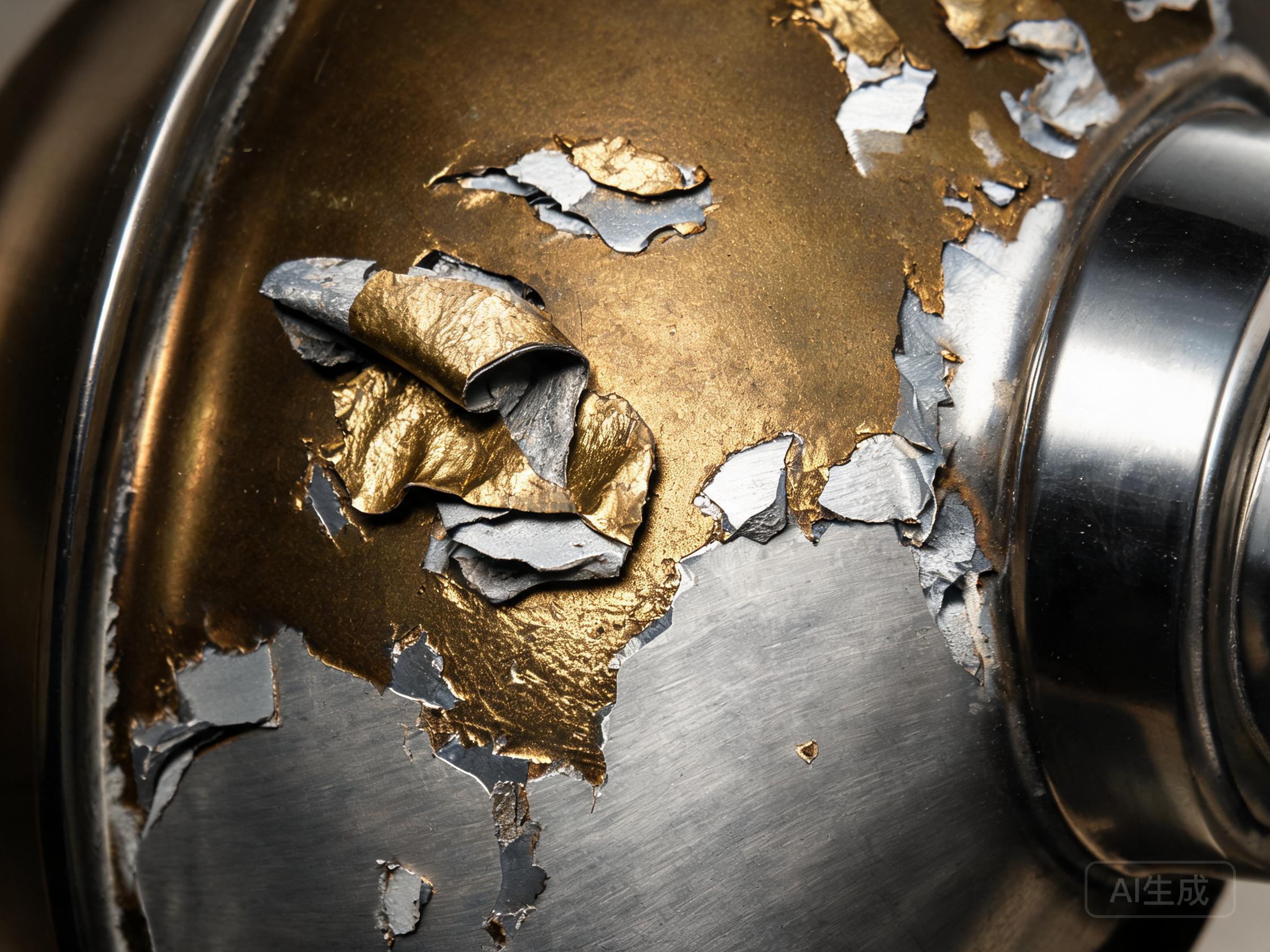
Short answer: PVD coating peels for one reason — the stainless surface was not clean enough or smooth enough before coating. Chinese PVD subcontractors often skip the alkaline degrease and the pre-coating bake to save 30 minutes per batch, and then blame the substrate grade. Control the surface preparation spec on the PO, not just the coating spec.
Architectural gold-tone elevator panels that looked perfect at the factory arrive at the site with edge flaking. Decorative 8K gold refrigerator doors peel within 12 months. Both have the same root cause: the PVD did not bond, because the substrate still had a film of drawing lubricant or mill oil.
Quick Comparison
| Substrate grade | PVD adhesion (cross-cut tape) | Typical failure mode | Coating thickness target |
|---|---|---|---|
| 304 BA | 3B–4B (good on 80% of batches) | Edge flaking, field scratch peeling | 0.3–0.6 µm |
| 304 8K | 4B | Minor spot peeling if surface contaminated | 0.3–0.6 µm |
| 316L BA | 5B | Very rare | 0.4–0.8 µm |
| 316L 8K | 5B | Almost never | 0.4–0.8 µm |
| 430 BA | 3B | Poor overall, ferrite structure is harder to coat | 0.3–0.5 µm |
316L is the gold standard for PVD-substrate compatibility, but a properly cleaned 304 BA will still pass adhesion tests. The surface preparation matters more than the substrate grade for most applications.
What Buyers Should Evaluate
- Require the coating vendor to list the full pre-coating cleaning sequence on their quotation, not just “cleaned.”
- Insist on a sample panel (150 × 150 mm) coated with the same batch, then tested with ASTM D3359 cross-cut tape before volume production.
- Specify coating thickness minimum and maximum. Too thick (over 1.0 µm) creates internal compressive stress; too thin (under 0.2 µm) wears through. 0.4–0.6 µm is the safe range for decorative applications.
- Confirm the PVD deposition method. Cathodic arc (Arc-PVD) gives better adhesion than magnetron sputtering for colored stainless panels.
Common Purchasing Mistakes
- Choosing a PVD vendor by price alone. The cheapest subcontractors in China often reuse contaminated cleaning baths (the alkaline degrease that should be changed weekly is changed monthly) and skip the 120 °C pre-coating bake. This gives you a 25 % lower coating cost and a 30 % higher peel rate. Pay for a written cleaning log per batch.
- Specifying “colored PVD” without naming the chemistry. TiN gives gold, TiCN gives rose-gold or black, TiAlN gives gunmetal grey, CrN gives silver. If you do not name it, you will get whatever target the vendor has on hand that day — and the color may be off.
- Accepting “standard” coating thickness. 0.3 µm TiN and 0.8 µm TiN look very different in color depth and wear resistance. Put both a minimum and a maximum in the spec.
Recommended RFQ Wording
Grade: AISI 316L / EN 1.4404, cold rolled, BA surface, Ra ≤ 0.2 µm PVD coating: Cathodic arc TiCN (rose-gold), target color per reference panel Pre-coating preparation: Alkaline degrease, nitric etch, DI rinse, isopropanol wipe, 120 °C bake 30 min Coating thickness: 0.4–0.6 µm, per point (10 points per panel) Adhesion test: ASTM D3359 cross-cut tape 5B required, one sample per batch Certificate: EN 10204 3.1 + PVD process log + thickness report + adhesion test report
How Still Steel Supports the Project
Still Steel supplies cold rolled stainless steel sheet and strip in 304/304L/316/316L/430 with 2B, BA, No.4 and 8K surfaces. We handle pickling passivation, electropolishing and PVD coating under one roof so your surface tolerance stays consistent. Send the grade, gauge, width and your specific surface problem to vip@still-steel.com, or discuss the requirement on WhatsApp.
Frequently Asked Questions
Does PVD coating adhere better on 316 stainless than on 304?
Yes, on a properly prepared surface 316L (EN 1.4404) gives consistently better PVD adhesion than 304L (EN 1.4307). The lower carbon content and cleaner microstructure of 316L mean fewer carbide precipitates at grain boundaries, which otherwise act as weak points under the ceramic coating. For critical colored panels, specify 316L BA or 8K substrate.
What surface preparation is required before PVD coating to prevent peeling?
A four-stage cleaning sequence: alkaline degrease (pH 10–12, 60 °C), acid etch (20 % nitric, 40 °C), DI water rinse, and final alcohol wipe with 99 % isopropanol, followed by 120 °C pre-coating bake for 30 minutes. The substrate surface must reach Ra ≤ 0.2 µm (BA or 8K) before coating begins.
How thick should the PVD layer be, and what adhesion test should I require?
Functional PVD coatings (TiN, TiCN, TiAlN) should be 0.3–0.8 µm. Thin coatings (< 0.2 µm) look cheap and peel easily; thick coatings (> 1.0 µm) develop internal stress and crack. Require the ASTM D3359 cross-cut tape test — 5B rating (no peeling) is the minimum acceptance level.
Technical References
- ASTM D3359 standard test method for measuring adhesion by tape test
- ASTM A240/A240M flat-rolled stainless steel sheet
- EN 10088-2 stainless steels — Part 2: Sheet, strip and plate
Reference documents support general selection and fabrication principles. The final material decision must follow the applicable contract, standard, regulation and engineering review for the specific product.