
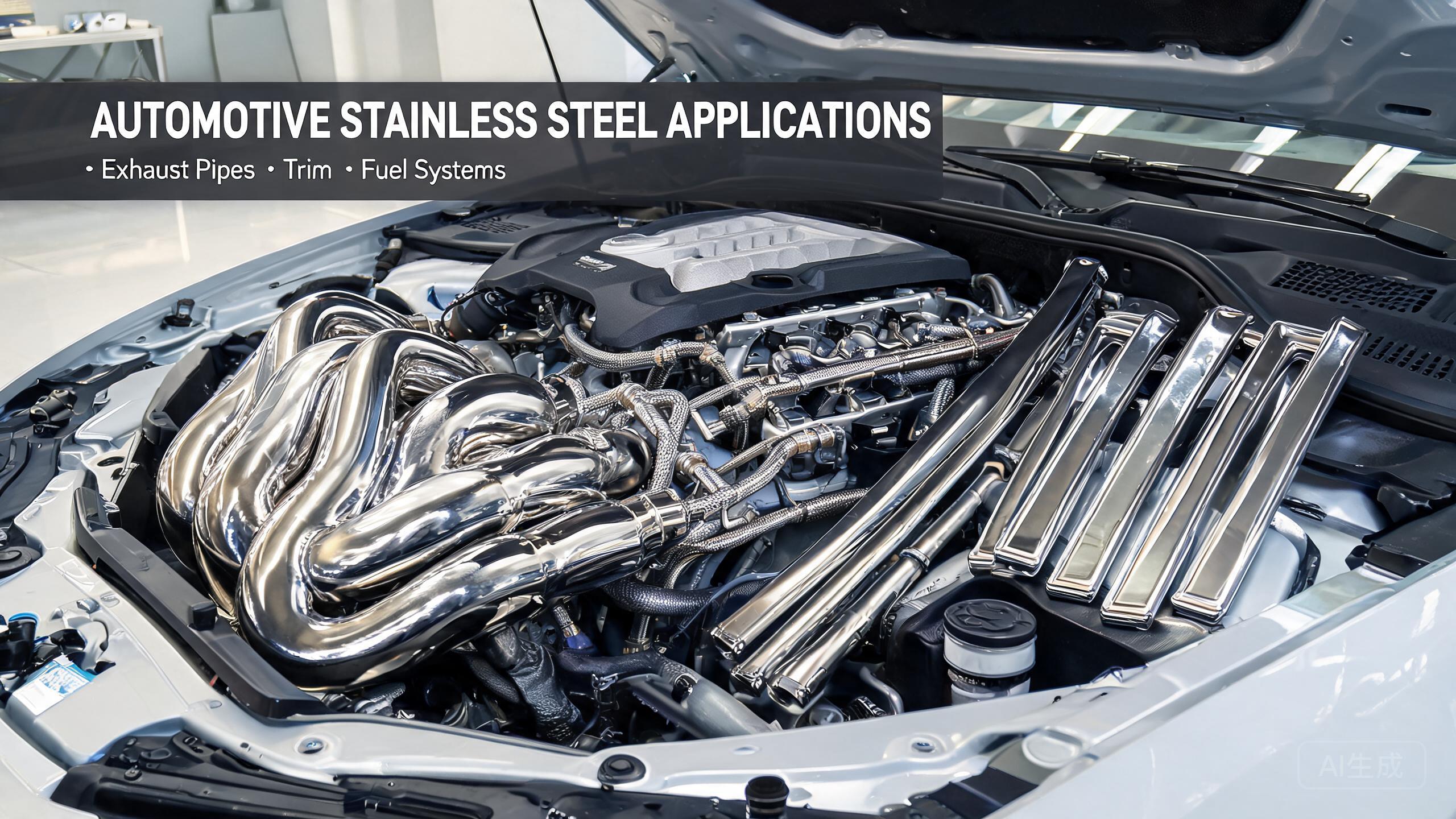
Short answer: Automotive exhaust systems span a wide temperature range, so steels are chosen by position: 409 is the workhorse for cold ends and general exhaust tubing; 439 and 441 handle hotter mid-pipes and manifolds; 304 / 321 are typical for high-performance or aftermarket systems; and 316L or specialty grades appear in extreme turbo manifolds. Structural chassis or body-in-white parts lean towards 301, 304 or 200-series lean grades where corrosion, weight and formability trade off against cost. For a closer look at heat-resistant grades, see our guide to high-temperature exhaust stainless steels.
This guide is written for stainless steel buyers, sourcing teams, engineers and product manufacturers. The purpose is not to declare one universal winner, but to turn a broad material question into a specification that a mill or service center can quote, process and inspect consistently.
Quick Comparison
| Option | Key point | Typical use or decision |
|---|---|---|
| 409 (1.4512) | 11% Cr, Ti-stabilized, low-cost | Muffler shells, tailpipes, cold ends |
| 439 / 441 | Ti/Nb-stabilized, better hot-end properties | Hot ends, downpipes, manifolds, DPF housings |
| 304 / 304L | High formability, good corrosion | Aftermarket systems, trim, structural chassis |
| 316L / 321 | Higher temp or chloride resistance | Marine exhaust, coastal vehicles, extreme turbos |
The table is a starting point. Actual performance depends on the governing standard, delivered condition, dimensions, surface finish, fabrication route and service environment. Commercial names should never replace a complete purchase specification.
What Buyers Should Evaluate
- Specify whether the steel is for an OEM, aftermarket or retrofit application; warranties and appearance classes differ.
- Quote wall thickness for tubing with realistic bend-radius, because thinner walls improve weight but reduce fatigue life.
- For chassis parts, specify the test coupon direction (transverse vs longitudinal) and cold-form strain level.
For production orders, share the end use rather than requesting a grade or finish in isolation. A supplier can then review corrosion exposure, forming severity, welding, visual requirements and packing before material is cut. This early review is usually less expensive than correcting a rejected shipment or unstable production trial.
Common Purchasing Mistakes
- Treating “409” as interchangeable with every ferritic grade, and paying too much or buying incorrect oxidation properties
- Using bright decorative 304 tube without the right forming tolerance, then cracking during tight-radius mandrel bending
- Ignoring thermal-cycling corrosion in under-deicing-salt markets, especially North America, Europe and North China
These mistakes are avoidable when drawings, approved samples, inspection methods and certificate requirements are agreed before production. For visual products, retain a signed master sample. For functional dimensions, define where and how measurements will be taken.
Recommended RFQ Wording
List alloy by UNS or EN number, product form (tube, pipe, sheet), finish, bendability or forming class, corrosion test (salt spray, cyclic oxidation) if required, weld test, and packaging that prevents transit damage to polished or ground surfaces.
Also include order quantity, acceptable quantity variation, destination, required delivery date and whether partial shipments are allowed. If a requirement is critical, make it measurable and place it on the purchase order rather than only in an email conversation.
How Still Steel Supports the Project
Still Steel supplies stainless steel coil, strip and sheet and provides slitting, cut-to-length, brushing, polishing and protective-film services. We can compare available mill material with your drawing, prepare trial quantities and preserve heat-number traceability through service-center processing.
Send the grade, dimensions, annual volume and application to vip@still-steel.com, or discuss the requirement on WhatsApp.
Frequently Asked Questions
Why do OEMs use 409 exhaust tube instead of 304?
409 is Ti-stabilized 11% Cr ferritic, designed for cyclic oxidation up to ~800 °C at a lower cost than 304, which is more than needed for most passenger-car cold ends.
Is 439 or 441 better for turbo manifolds?
441 is more oxidation-resistant at the hottest end thanks to higher Cr + Nb/Ti stabilization. 439 works for intermediate hot ends and is easier to form.
Can I use 304 for aftermarket exhaust tubing?
Yes, and it is common. For performance cars, evaluate thermal fatigue cycles and check the grade matches the customer’s warranty or cosmetic expectations.
Technical References
Reference documents support general selection and fabrication principles. The final material decision must follow the applicable contract, standard, regulation and engineering review for the specific product.