
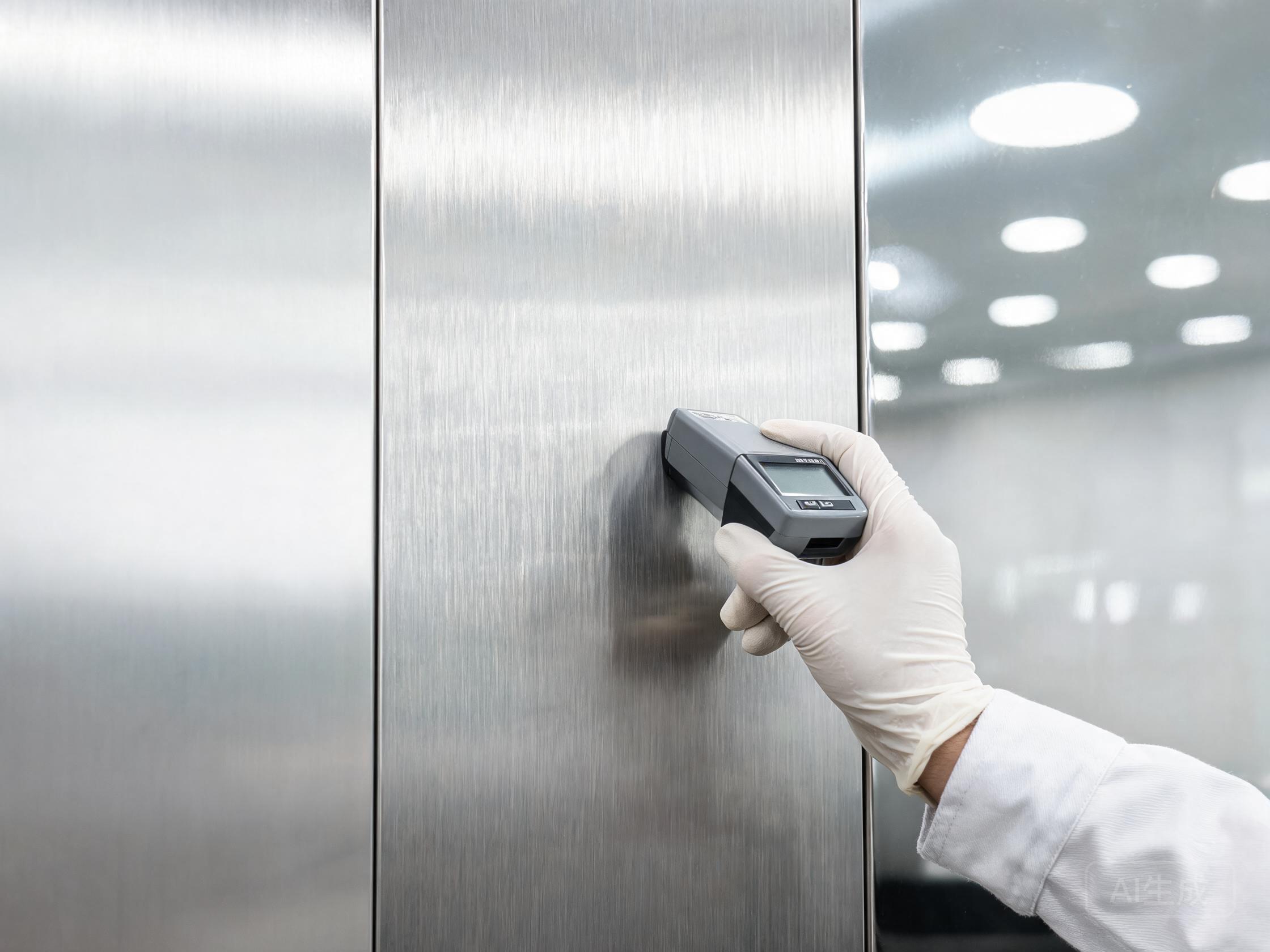
Short answer: Choose 2B for functional or hidden surfaces, BA for bright appliance fronts, No.4 or HL for large panels that need a repairable directional grain, and 8K mirror only for small premium trim with controlled flatness and handling. Matching stainless lots is harder than choosing a finish code: buyers must specify Ra, gloss, grain direction and an approved master sample, then check every lot under the same light.
Finish codes are a starting point, not a complete specification. Two suppliers can both quote “No.4” and deliver surfaces that look different side by side, because abrasive grade, pressure, line speed and substrate condition all change the result. This guide turns the finish name into a measurable purchase requirement.
Quick Comparison
| Finish | Typical Ra | Appearance | Best panel use | Main purchasing risk |
|---|---|---|---|---|
| 2B | 0.1–0.5 µm | Smooth, low-to-medium reflectivity | Hidden parts, liners, fabrication stock | Oil residue, roll marks, inconsistent cleaning |
| BA | 0.05–0.2 µm | Bright, clean, high reflectivity | Appliance fronts, reflectors, trim | Gloss variation between lots, fingerprints |
| No.4 | 0.5–1.5 µm | Directional brushed grain | Elevator doors, large appliance panels | Grain mismatch, scratch visibility, repair marks |
| HL | 0.2–0.8 µm | Fine directional hairline | Architectural and appliance panels | Grain width drift, edge scratches |
| 8K | typically ≤0.05 µm | Mirror reflection | Small lobby trim, premium interiors | Distortion, pinholes, thickness loss, fingerprints |
Ra values are typical ranges, not universal limits. The actual surface depends on the mill, the finishing line, the substrate and the measurement position. Agree the measurement method and the acceptance range in the purchase order.
What Buyers Should Evaluate
The visual standard, not only the code
Approve a full-size panel or a panel-sized coupon under the lighting used by the end customer. A small coupon can look perfect while a 1.2 m × 2.4 m panel shows waviness, haze or grain drift. Record the light source, viewing distance and viewing angle, and keep the approved sample signed and dated.
Grain direction and panel orientation
No.4 and HL finishes are directional. Adjacent panels must have the grain running the same way relative to the installation. On elevator doors and appliance fronts, a 90-degree grain mismatch is visible before any scratch. State whether grain runs along the length or the width, and mark the orientation on the drawing.
Gloss and Ra as measurable limits
“Bright”, “matte” and “mirror” are not measurements. Use gloss units at an agreed angle, and Ra or Rz measured per an agreed surface-texture standard. A practical specification gives a target plus a tolerance, not a single number. For BA and 8K, also control haze and pinholes, which a gloss meter alone will not catch.
Substrate flatness and polishing removal
8K and heavy No.4 polishing remove material. On thin sheet this can reduce thickness, amplify waviness and create edge roll. Specify the minimum thickness after finishing, flatness after polishing and the allowable waviness. If the part is load-bearing or must fit a frame, check the finished panel, not the mill sheet.
Lot matching across a project
Projects are often supplied in several lots. Chemistry and annealing conditions can shift slightly, and a new finishing line can change the look. Ask for the same mill, same finishing line and same production window where possible. For each lot, require a retained sample, a gloss/Ra record and a visual check against the master.
Protective film and handling
Film type, adhesion and removal timing affect the surface the customer sees. A film that is too aggressive can leave residue; a film applied over an unclean surface can trap particles. Specify the film, the application side, the maximum storage period and the removal instructions.
Common Purchasing Mistakes
- Approving a coupon instead of a full panel. Small samples hide waviness, grain drift and reflection distortion. Approve at the size and orientation the customer will see.
- Using “mirror” without a gloss or Ra limit. Suppliers can describe a bright BA or a light polish as mirror. Define gloss, Ra, haze and pinholes, and approve the actual panel.
- Ignoring grain direction on adjacent panels. Two correct No.4 panels with opposite grain still look wrong when installed side by side. Put the grain direction on the drawing.
- Specifying 8K on thin sheet without a flatness limit. Polishing can turn a flat 0.5 mm sheet into a wavy panel. Set flatness after finishing and a minimum finished thickness.
- Accepting a finish substitution as “close enough”. 2B delivered against a BA order, or BA delivered against an 8K order, is a specification change. Require written approval and a price adjustment, not a verbal assurance.
- Skipping grade and certificate checks because the surface looks right. A beautiful finish can sit on 430 or 201 instead of 304. Ask for EN 10204 3.1 and PMI the Cr, Ni and Mo values, especially for wet or coastal installations.
The acceptance rule is simple: finish code, Ra range, gloss range, grain direction, master sample and certificate must all agree before the lot is released.
Recommended RFQ Wording
Copy and adapt this clause:
Finish: No.4, grain direction along length, Ra 0.8 µm maximum at the agreed measurement position, gloss range to be agreed against the approved master sample. Each lot must match the signed master panel under D65 lighting at 1 m viewing distance. Adjacent panels to be supplied from the same finishing line and production window where possible. 8K mirror quotations must state the minimum thickness after polishing, flatness limit and pinhole acceptance. All material to be 304 per ASTM A240/A240M with EN 10204 3.1 certificate; PMI required for Cr, Ni and Mo. Finish substitution is not permitted without written buyer approval.
For appliance programs, add the cleaning and fingerprint requirement. For elevator programs, add the handprint and anti-fingerprint treatment if specified.
FAQ
Which finish hides scratches best on a large panel?
A controlled No.4 or hairline (HL) finish usually hides handling marks better than a mirror finish. The directional grain also makes small repairs easier, but deep scratches remain visible and grain direction must be consistent across adjacent panels.
Is BA the same as 8K mirror?
No. BA is a bright annealed mill finish with a smooth, reflective surface. 8K describes a polished mirror finish produced with fine abrasives. They differ in process, gloss and cost, and BA should not be accepted as a substitute for a specified mirror finish.
Can 8K be supplied on thin sheet?
It can, but polishing removes material and thin sheet is more prone to distortion, pinholes and waviness. Specify the minimum thickness after finishing, flatness and a full-size approved panel rather than approving a small coupon.
How do I stop visible differences between lots?
Specify a Ra range, a gloss value and an approved master sample under defined lighting, then require each lot to come from the same mill and finishing line where possible. Record the approved sample and inspect every delivery against it.
Technical References
- ASTM A480/A480M — general requirements and standard finishes for flat-rolled stainless steel
- EN 10088-2 — technical delivery conditions for stainless steel sheet and strip
- ISO 21920-2 — surface texture profile parameters, including Ra and Rz
- ASTM D523 — specular gloss measurement
- ASTM A240/A240M — stainless steel plate, sheet and strip grades
Next Step
Send your panel drawing, finish code and target Ra/gloss to vip@still-steel.com, and we will compare the requirement with the available mill and finishing options before quoting. You can also submit the finish specification here or message us on WhatsApp at wa.me/8613867898840.
Ningbo Wanguang Stainless Steel Material CO., LTD. · Still Steel