
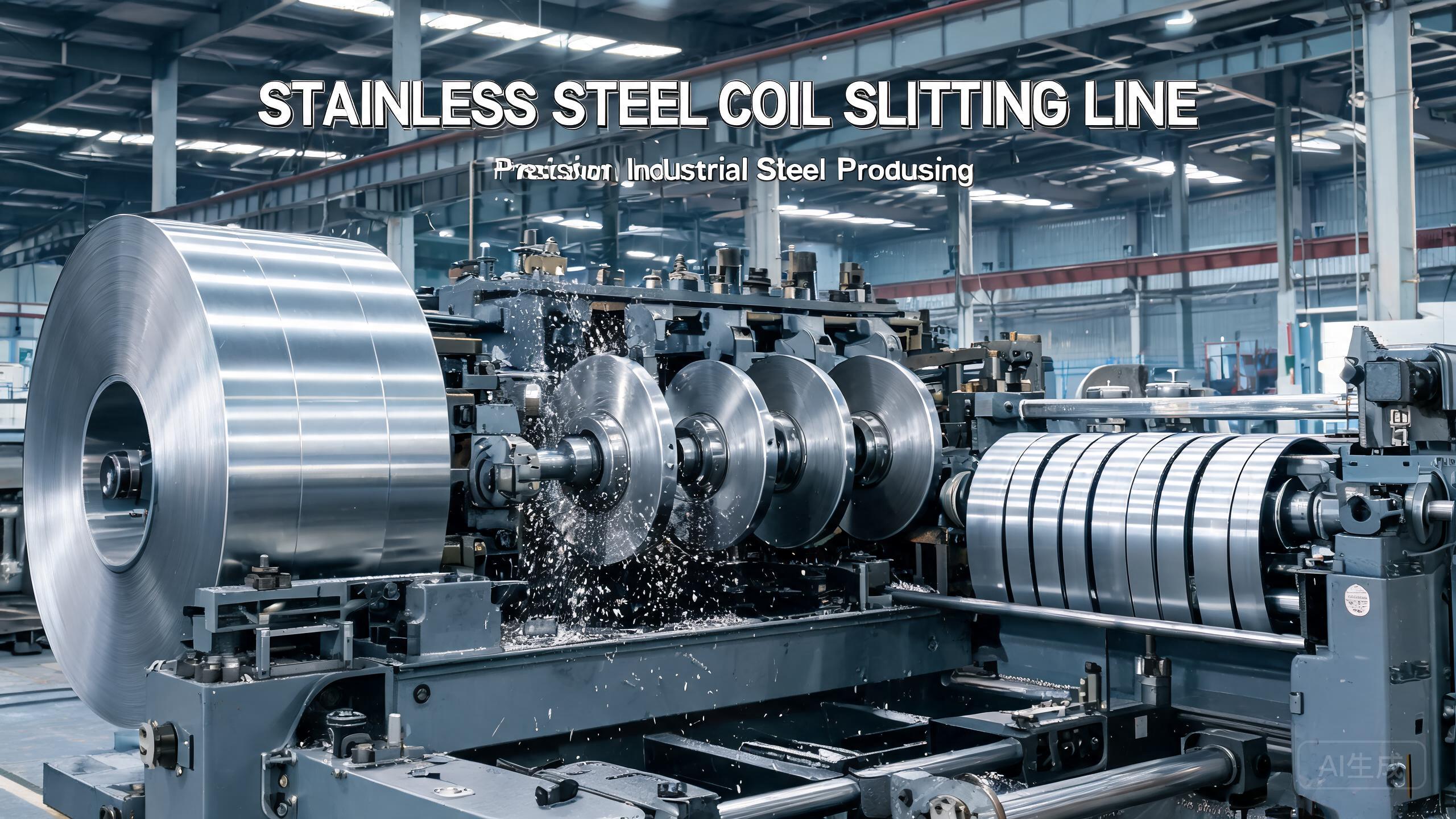
Short answer: Slitting cuts stainless master coils into narrower widths for stamping, roll-forming, tube-welding or sheeting. Quality is defined by width tolerance, burr height, edge condition (shear/slit/rounded), camber and edge wave. For most downstream fabrication a burr ≤ 5 % of material thickness and camber ≤ 1 mm per 2 m is a reasonable baseline, with tighter limits for precision stamping, tube-mill or laser-feed strip.
This guide is written for stainless steel buyers, sourcing teams, engineers and product manufacturers. The purpose is not to declare one universal winner, but to turn a broad material question into a specification that a mill or service center can quote, process and inspect consistently.
Quick Comparison
| Option | Key point | Typical use or decision |
|---|---|---|
| Standard slitting (commercial width tolerance) | Width tol. typically ±0.08–0.15 mm for strip, burr ≤ 5% t | General fabrication, sheeting, non-critical bending |
| Precision slitting | Tighter width, burr and camber | Tube mills, roll-forming, long strip feed |
| Edge-conditioned strip (rounded / de-burred) | Post-slit edge treatment | Formed edge parts, hand-safe strip, gasket seating |
The table is a starting point. Actual performance depends on the governing standard, delivered condition, dimensions, surface finish, fabrication route and service environment. Commercial names should never replace a complete purchase specification.
What Buyers Should Evaluate
- Link each quality requirement to the downstream process; do not over-spec precision that the stamping or roll-former cannot use.
- Ask for a toll processor’s knife condition and change policy; dull knives produce burr, knife-marks and inconsistent edge quality.
- Define inner/outer wrap, core ID, max coil OD and lift points to avoid damaging the strip at the customer’s uncoiler.
Before specifying, confirm you are buying slit strip rather than a different product form by comparing mill edge vs slit edge vs trimmed edge, the differences between coil, sheet, plate and strip, and the thickness and width tolerances for stainless.
For production orders, share the end use rather than requesting a grade or finish in isolation. A supplier can then review corrosion exposure, forming severity, welding, visual requirements and packing before material is cut. This early review is usually less expensive than correcting a rejected shipment or unstable production trial.
Common Purchasing Mistakes
- Ordering “slit to width” without a tolerance and receiving widths that drift at the far end of each coil
- Assuming every service center inspects burr and camber; put a measurement requirement and reporting format on the PO
- Mixing short slit remnant coils in a continuous production line and paying the price in excessive setup scrap
These mistakes are avoidable when drawings, approved samples, inspection methods and certificate requirements are agreed before production. For visual products, retain a signed master sample. For functional dimensions, define where and how measurements will be taken.
Recommended RFQ Wording
State master coil source and grade, target width with tolerance (plus/minus or bilateral), burr height limit, camber limit, edge profile (slit/shear/dressed), protective film type, core ID, OD limit, packaging class, and whether the processor must report width/burr/camber data per coil.
Also include order quantity, acceptable quantity variation, destination, required delivery date and whether partial shipments are allowed. If a requirement is critical, make it measurable and place it on the purchase order rather than only in an email conversation.
How Still Steel Supports the Project
Still Steel supplies stainless steel coil, strip and sheet and provides slitting, cut-to-length, brushing, polishing and protective-film services. We can compare available mill material with your drawing, prepare trial quantities and preserve heat-number traceability through service-center processing.
Send the grade, dimensions, annual volume and application to vip@still-steel.com, or discuss the requirement on WhatsApp.
Frequently Asked Questions
What is an acceptable burr on slit stainless strip?
A common guideline is ≤ 5% of material thickness for general fabrication, and ≤ 2% for precision stampings, formed strips or critical welded edges. Always state a measured limit, not “deburred”.
Why does camber matter in roll-forming?
Excessive camber (lateral curvature along the strip length) causes uneven feeding, twist and dimension drift through the roll former. Strip for continuous forming typically needs camber ≤ 1 mm over 2 m, or tighter per the machine.
Can I re-slit a coil more than once?
Technically yes, but each slit pass adds edge work-hardening and reduces usable edge-to-edge yield. For thin gauges or high forming, prefer a single primary slit from a reputable toll processor.
Technical References
Reference documents support general selection and fabrication principles. The final material decision must follow the applicable contract, standard, regulation and engineering review for the specific product.