
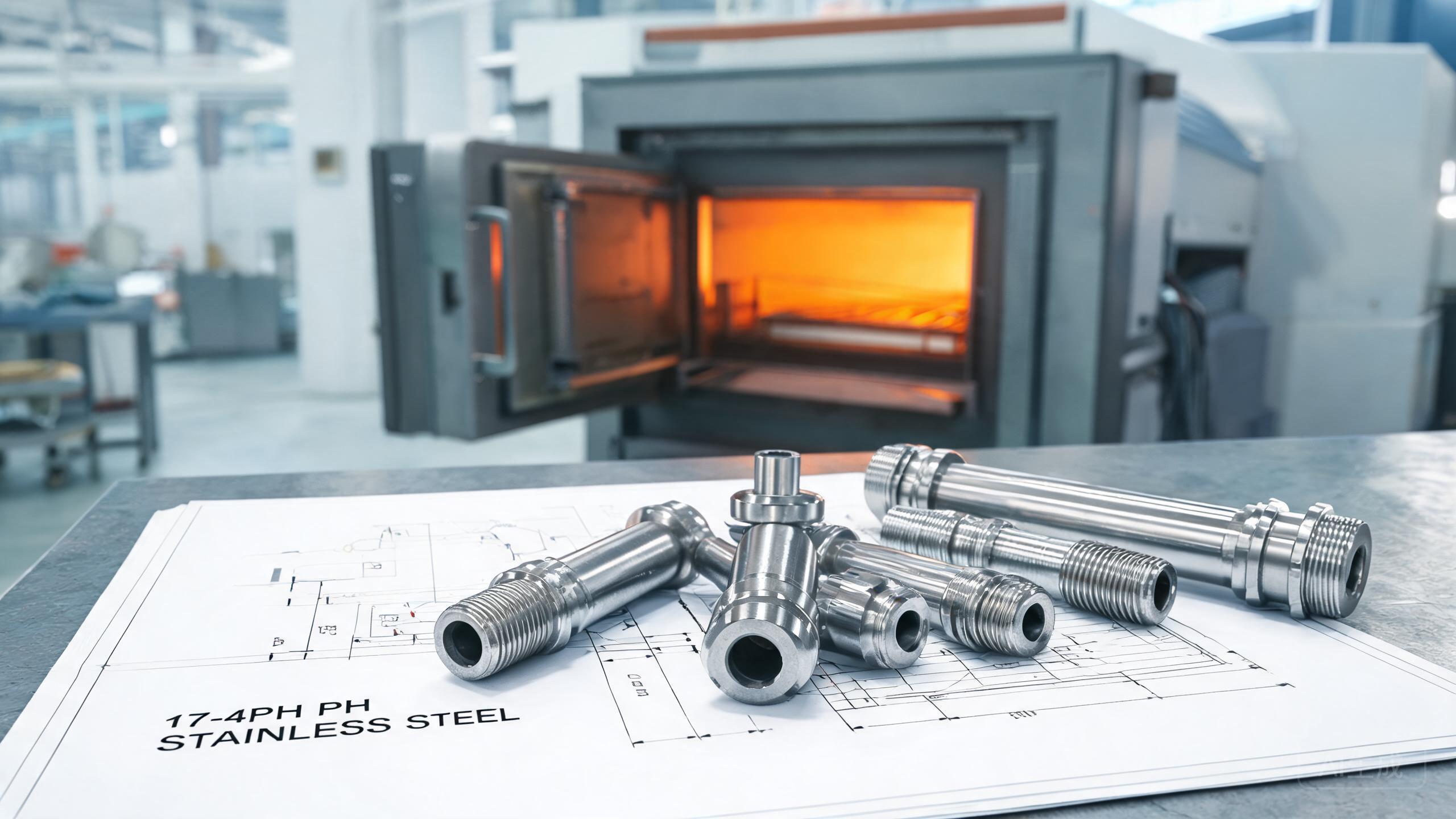
Short answer: Precipitation hardening (PH) stainless steels achieve very high strength and hardness via an aging heat treatment that precipitates intermetallic particles, rather than the quenching-and-tempering cycle of ordinary martensitic steels. 17-4PH (UNS S17400 / 630) is the most widely used for shafts, valves and aerospace; 17-7PH (S17700 / 631) is a semi-austenitic, often used for strip, springs and thin-wall parts; 15-5PH and PH 13-8 Mo offer better transverse toughness and higher strengths at a premium.
This guide is written for stainless steel buyers, sourcing teams, engineers and product manufacturers. The purpose is not to declare one universal winner, but to turn a broad material question into a specification that a mill or service center can quote, process and inspect consistently.
Quick Comparison
| Option | Key point | Typical use or decision |
|---|---|---|
| 17-4PH (S17400, 630) | Balanced PH, H900 ~44 HRC | Shafts, fasteners, gear parts, valve trim |
| 15-5PH (S15500) | Cleaner 17-4 variant, better transverse toughness | Aerospace, fracture-critical parts |
| 17-7PH (S17700, 631) | Semi-austenitic, strip-friendly | Springs, clips, diaphragms, thin sheet components |
| PH 13-8 Mo (S13800) | High strength + good toughness | Landing-gear parts, actuator components |
The table is a starting point. Actual performance depends on the governing standard, delivered condition, dimensions, surface finish, fabrication route and service environment. Commercial names should never replace a complete purchase specification.
What Buyers Should Evaluate
- Always state the delivery condition (solution treated A, condition H1025, H900, H1150 etc.) because PH properties are defined by aging.
- Specify bar quality class (aircraft quality, premium, etc.) if transverse toughness or ultrasonic cleanliness is required.
- For 17-7PH strip, specify the condition (TH1050, RH950, CH900 etc.) because the forming route controls the final phase.
If you are weighing PH grades against conventional martensitic options, our overview of martensitic stainless steel properties and the 410 vs 410S stainless steel comparison show where the hardness-from-heat-treatment families overlap and diverge.
For production orders, share the end use rather than requesting a grade or finish in isolation. A supplier can then review corrosion exposure, forming severity, welding, visual requirements and packing before material is cut. This early review is usually less expensive than correcting a rejected shipment or unstable production trial.
Common Purchasing Mistakes
- Ordering “17-4” without a temper and receiving solution-treated bar that has not been aged to service hardness
- Welding a critical 17-4PH assembly with a generic filler and then expecting weldment strength to match the parent
- Machining a part after hardening when it should have been roughed out in solution-treated A condition
These mistakes are avoidable when drawings, approved samples, inspection methods and certificate requirements are agreed before production. For visual products, retain a signed master sample. For functional dimensions, define where and how measurements will be taken.
Recommended RFQ Wording
State UNS or AISI number, form (bar/forging/strip/wire), delivery condition (solution treated / aged to Hxxx), hardness or mechanical test band, ultrasonic or magnetic-particle inspection requirements, and certificate of heat treatment.
Also include order quantity, acceptable quantity variation, destination, required delivery date and whether partial shipments are allowed. If a requirement is critical, make it measurable and place it on the purchase order rather than only in an email conversation.
How Still Steel Supports the Project
Still Steel supplies stainless steel coil, strip and sheet and provides slitting, cut-to-length, brushing, polishing and protective-film services. We can compare available mill material with your drawing, prepare trial quantities and preserve heat-number traceability through service-center processing.
Send the grade, dimensions, annual volume and application to vip@still-steel.com, or discuss the requirement on WhatsApp.
Frequently Asked Questions
Why is 17-4PH the most popular PH stainless?
17-4PH is a martensitic PH grade with excellent through-hardening up to H900 (~44 HRC), good machinability in the solution-treated condition, and corrosion resistance roughly between 304 and 430.
What is the difference between H900 and H1100?
They are precipitation-hardening conditions. H900 (1 h @ 482 °C) gives peak hardness; H1100 (4 h @ 593 °C) reduces hardness to ~38 HRC while gaining toughness and stress relaxation.
Can I replace 410 with 17-4PH in shafts?
Yes when the design needs higher strength or better corrosion resistance, but validate toughness direction, notch sensitivity and cost before swapping.
Technical References
Reference documents support general selection and fabrication principles. The final material decision must follow the applicable contract, standard, regulation and engineering review for the specific product.