
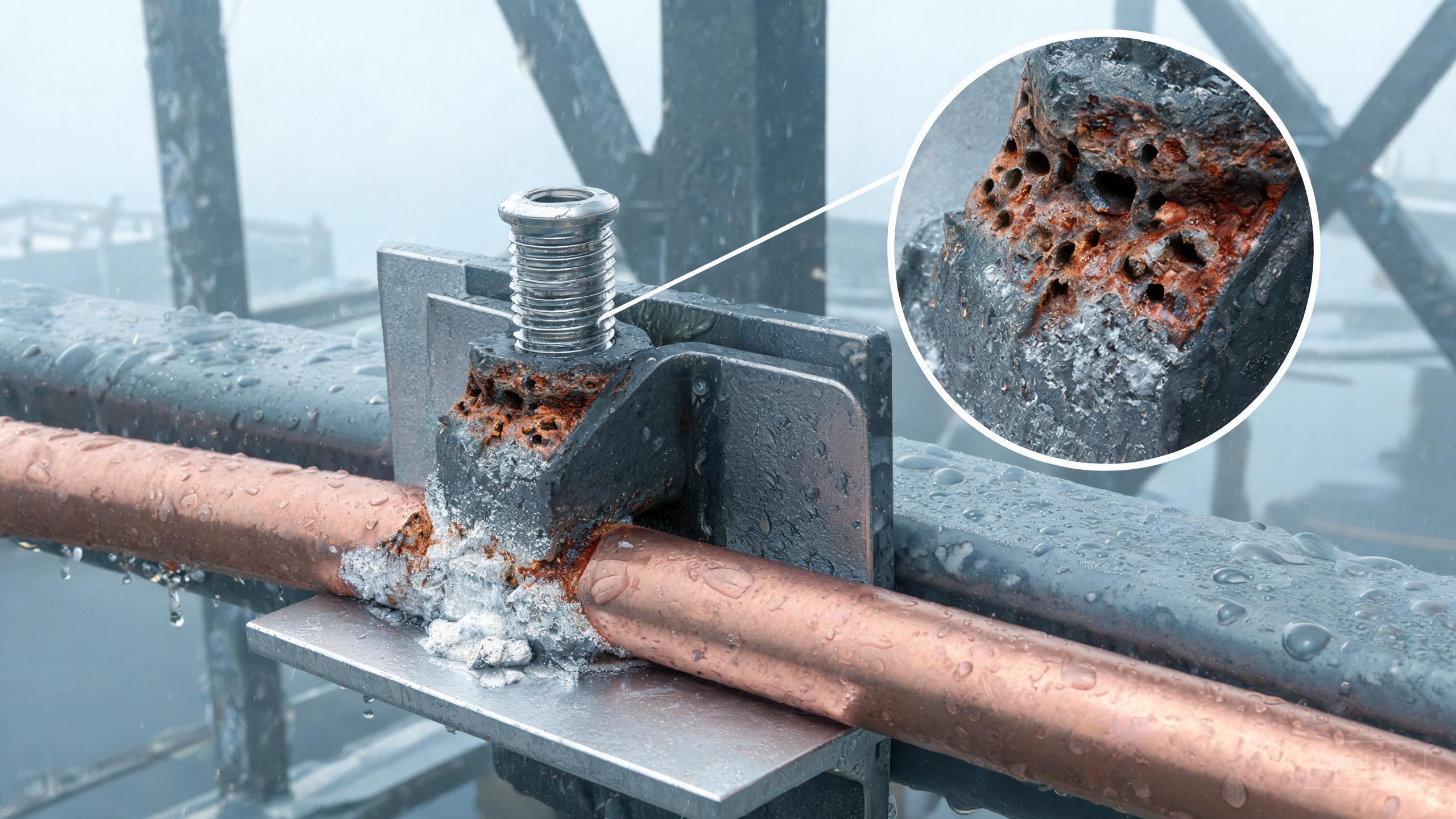
Short answer: Galvanic corrosion occurs when two dissimilar metals are electrically connected in the presence of an electrolyte. In stainless steel assemblies, the most common bimetallic pairs are with carbon steel, aluminum, copper and brass. Carbon steel and aluminum become the anode (sacrificial) when coupled to stainless and will corrode preferentially; copper/brass are typically cathodic to stainless, which can accelerate stainless attack in hot chloride or stagnant water. Risk is controlled by matching alloys, using insulating washers/gaskets, applying compatible coatings or designing with a predictable sacrificial path.
This guide is written for stainless steel buyers, sourcing teams, engineers and product manufacturers. The purpose is not to declare one universal winner, but to turn a broad material question into a specification that a mill or service center can quote, process and inspect consistently.
Quick Comparison
| Option | Key point | Typical use or decision |
|---|---|---|
| 304/316 + carbon steel (contact) | Steel becomes sacrificial anode | Structural: coat steel or isolate |
| 304/316 + aluminum | Aluminum is very anodic, high risk | Cladding, panels, window systems: isolate with PTFE/EPDM |
| 304/316 + copper / brass | Copper more noble; stainless may pit in hot chloride | Plumbing: dielectric unions or isolating flanges |
| 304 + 316 or 316 + 2205 | Same-family couple, low risk in most environments | Mixed-grade process piping, typically OK without isolation |
The table is a starting point. Actual performance depends on the governing standard, delivered condition, dimensions, surface finish, fabrication route and service environment. Commercial names should never replace a complete purchase specification.
What Buyers Should Evaluate
- Consider the electrolyte: dry indoor service is low risk; wet, salt-laden or buried applications are high risk and need mitigation. To understand when the stainless side itself starts to lose corrosion resistance, see why stainless steel rusts.
- Review the area ratio: a small anode and a large cathode (e.g. a zinc washer under a big stainless plate) accelerates anode consumption fast.
- Specify isolating hardware in the purchase order, not just in drawings, so it ships with the job.
For production orders, share the end use rather than requesting a grade or finish in isolation. A supplier can then review corrosion exposure, forming severity, welding, visual requirements and packing before material is cut. This early review is usually less expensive than correcting a rejected shipment or unstable production trial.
Common Purchasing Mistakes
- Fastening aluminum panels with 316 stainless self-drilling screws in a coastal facade and returning in two years to find aluminum around every hole
- Using plain brass fittings on 304 piping with untreated well water and seeing pinhole leaks at the joint
- Forgetting that coating the anode (carbon steel) only works if the coating is continuous; holidays become rapid-corrosion sites
These mistakes are avoidable when drawings, approved samples, inspection methods and certificate requirements are agreed before production. For visual products, retain a signed master sample. For functional dimensions, define where and how measurements will be taken.
Recommended RFQ Wording
Describe the joint stack-up: metal A, metal B, gasket or separator material, bolt material, coating system, electrolyte exposure class, and any required standard such as ISO 21781 or NACE SP0177 for mitigation design.
Also include order quantity, acceptable quantity variation, destination, required delivery date and whether partial shipments are allowed. If a requirement is critical, make it measurable and place it on the purchase order rather than only in an email conversation.
How Still Steel Supports the Project
Still Steel supplies stainless steel coil, strip and sheet and provides slitting, cut-to-length, brushing, polishing and protective-film services. We can compare available mill material with your drawing, prepare trial quantities and preserve heat-number traceability through service-center processing.
Send the grade, dimensions, annual volume and application to vip@still-steel.com, or discuss the requirement on WhatsApp.
Frequently Asked Questions
If I fasten 304 stainless to carbon steel, which corrodes?
In a conductive electrolyte (rain, condensation, brine), the mild steel is the anode and will corrode preferentially, protecting the stainless. Over long exposure the steel can lose significant thickness unless coated or isolated.
Is aluminum safe with 316 stainless in marine service?
Aluminum is very active compared to 316 and will be the anode. In wet, chloride-rich environments isolate with PTFE gaskets, non-conductive washers, or use a compatible conversion coating/sealant system to limit the galvanic path.
Should I use carbon-steel bolts on stainless-steel facade?
Avoid where visible or exposed. If it is unavoidable, select hot-dip galvanized or coated fasteners, plan maintenance, or better, switch to matching A4-70 / A4-80 stainless fasteners to eliminate the galvanic couple.
Technical References
Reference documents support general selection and fabrication principles. The final material decision must follow the applicable contract, standard, regulation and engineering review for the specific product.