
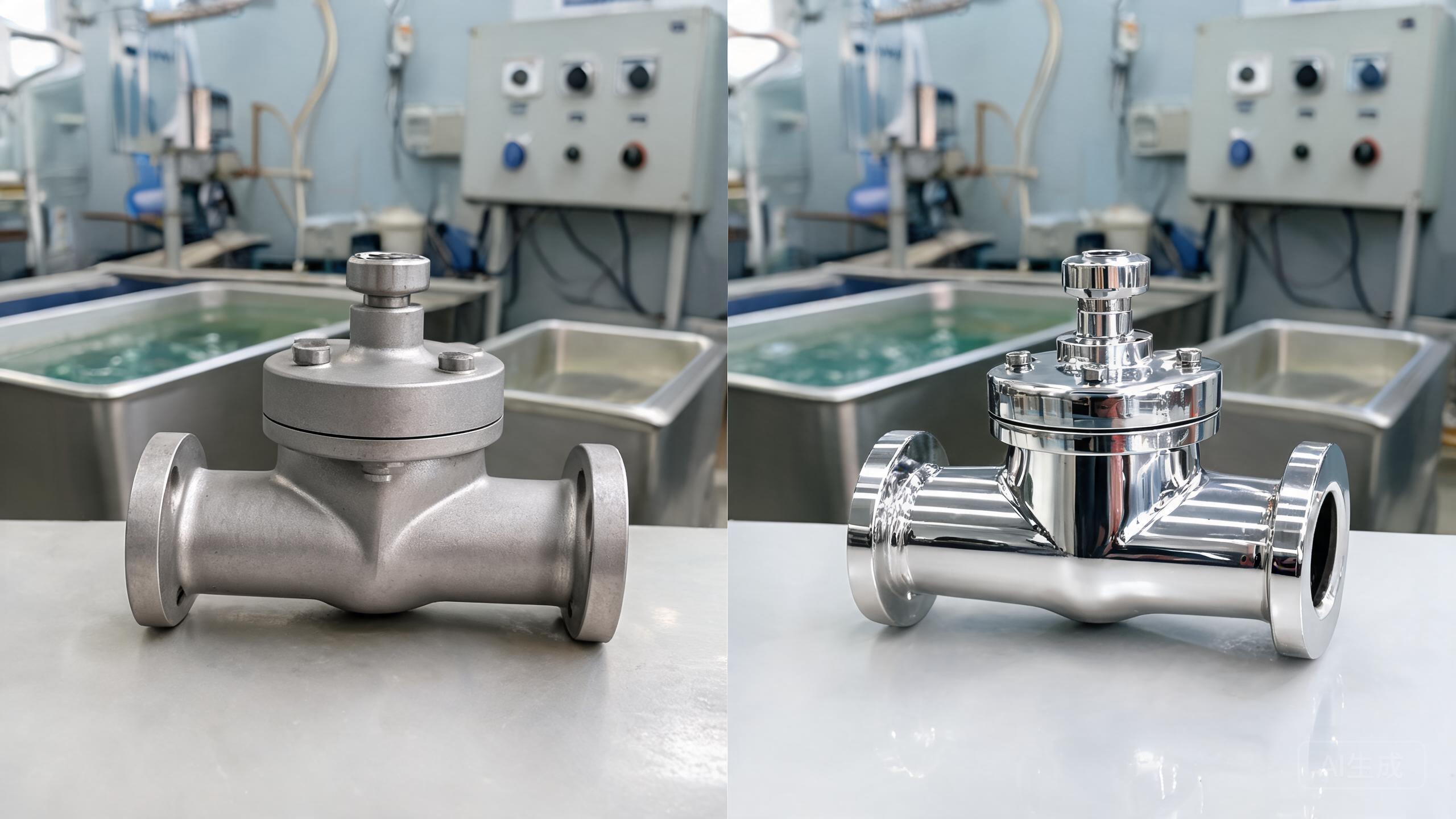
Short answer: Electropolishing is an electrochemical process that removes a thin surface layer from stainless steel, smoothing micro-peaks, dissolving embedded iron, and brightening the surface. It improves cleanability and corrosion resistance but does not eliminate deep defects. It is popular for food-contact, pharmaceutical and sanitary components, and where consistent micro-smoothness matters more than decorative mirror polish.
This guide is written for stainless steel buyers, sourcing teams, engineers and product manufacturers. The purpose is not to declare one universal winner, but to turn a broad material question into a specification that a mill or service center can quote, process and inspect consistently.
Quick Comparison
| Option | Key point | Typical use or decision |
|---|---|---|
| Mechanical polish / buffing | Removes material by abrasion, produces decorative sheen | Visible trim, signage, mirror panels |
| Electropolishing | Electrochemical material removal, micro-smoothing | Sanitary tubing, tanks, pharmaceutical parts |
| Electropolish + passivation | Combined treatment for regulated industries | Bioreactors, process vessels, implantable components |
The table is a starting point. Actual performance depends on the governing standard, delivered condition, dimensions, surface finish, fabrication route and service environment. Commercial names should never replace a complete purchase specification.
What Buyers Should Evaluate
- State the starting surface and required Ra / Rz targets rather than a generic “smooth.” To set realistic targets, first review how mill and mechanical surface finishes compare.
- Define the exact material removal range; too much removal may attack fine features or thin walls.
- Pre-approve a sample fixture layout for complex parts to avoid hidden rack marks.
For production orders, share the end use rather than requesting a grade or finish in isolation. A supplier can then review corrosion exposure, forming severity, welding, visual requirements and packing before material is cut. This early review is usually less expensive than correcting a rejected shipment or unstable production trial.
Common Purchasing Mistakes
- Expecting electropolishing to eliminate deep press lines or coarse grinder marks
- Specifying the process without a measurable Ra / Rz target or inspection method
- Masking only part of a surface and then paying to correct racking lines
These mistakes are avoidable when drawings, approved samples, inspection methods and certificate requirements are agreed before production. For visual products, retain a signed master sample. For functional dimensions, define where and how measurements will be taken.
Recommended RFQ Wording
Describe the part, alloy, starting condition, required Ra or Rz, material-removal window, fixture/masking strategy, inspection method (profilometer, visual master sample, or both) and the applicable passivation or cleanliness standard.
Also include order quantity, acceptable quantity variation, destination, required delivery date and whether partial shipments are allowed. If a requirement is critical, make it measurable and place it on the purchase order rather than only in an email conversation.
How Still Steel Supports the Project
Still Steel supplies stainless steel coil, strip and sheet and provides slitting, cut-to-length, brushing, polishing and protective-film services. We can compare available mill material with your drawing, prepare trial quantities and preserve heat-number traceability through service-center processing. For food and sanitary applications, see our guide to food-contact stainless steel grades.
Send the grade, dimensions, annual volume and application to vip@still-steel.com, or discuss the requirement on WhatsApp.
Frequently Asked Questions
Does electropolishing make every part a perfect mirror?
No. Electropolishing micro-smooths and brightens but does not erase deep scratches or coarse pre-polish tool marks. Mechanical pre-polish may be needed first.
Is electropolished surface always more corrosion resistant?
In most cases it improves performance because it removes embedded contamination and peaks that trap deposits. The final grade and environment still set the limit.
Can I electropolish a welded assembly?
Yes, but ensure weld spatter and heavy heat tint are removed first. Fixture and masking design heavily affect appearance uniformity on assembled parts.
Technical References
Reference documents support general selection and fabrication principles. The final material decision must follow the applicable contract, standard, regulation and engineering review for the specific product.