
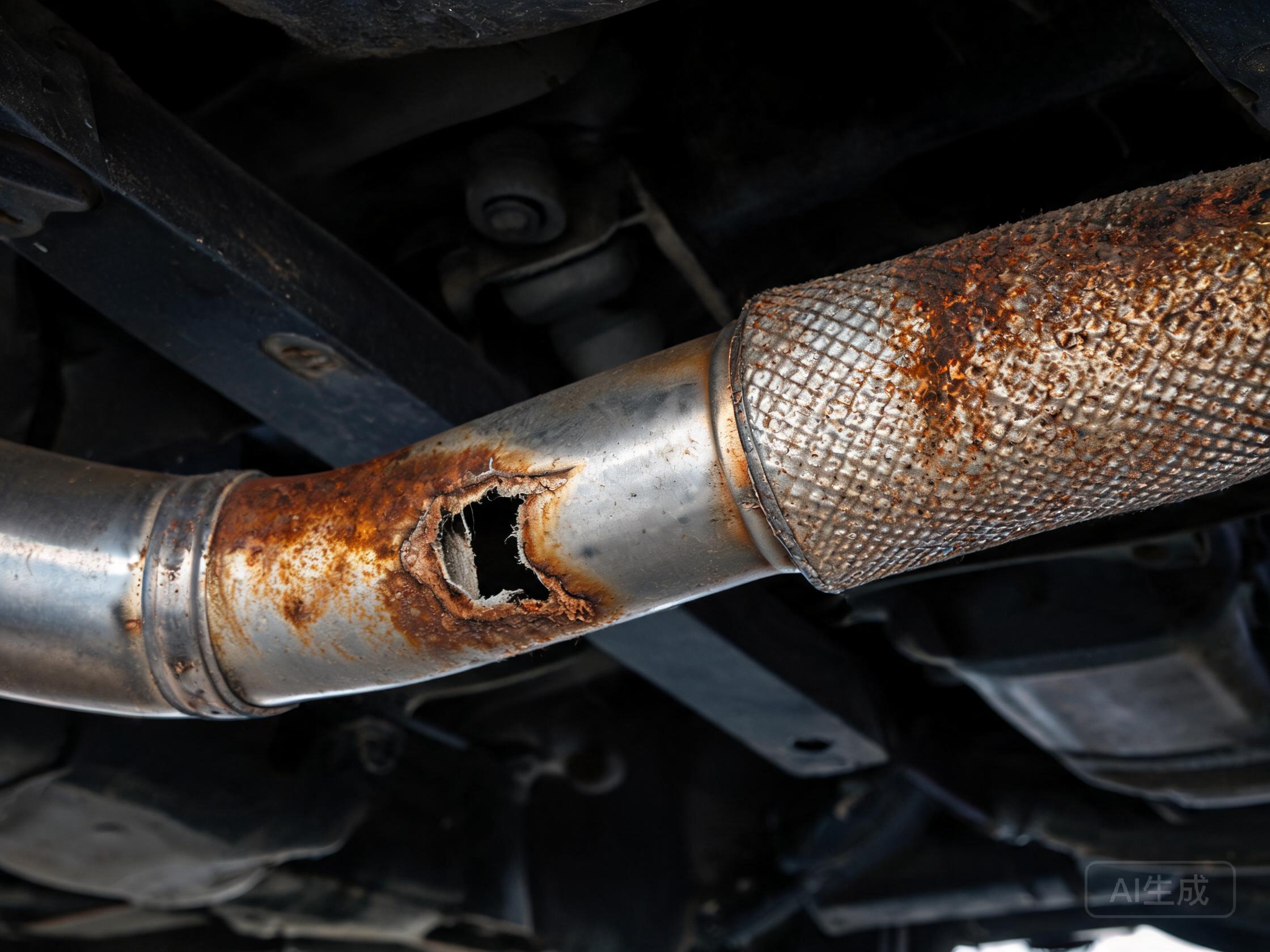
Short answer: Your stainless exhaust fails for three reasons, not one. The temperature is too high for the grade you picked. The condensate sits in a low spot you did not drain. And the sheet is too thin for the corrosion rate. Start with 409 at the hot catalytic end, 430 in the mid muffler, and 304 where condensate collects — and order 1.5 mm minimum, not 0.8 mm because your competitor uses it.
Automotive exhaust systems live at the intersection of high temperature and wet corrosion. The inside of a catalytic converter cycles between 200°C and 900°C every time you start the engine. The muffler cools to 40°C overnight and fills with water that contains NOx and sulfur. Thermal fatigue cracks the welds. Condensate eats the thin sheet. Buy the wrong cold rolled stainless steel grade or thickness and your muffler rusts through in three years instead of ten.
Quick Comparison
| Grade | Temp limit | Condensate resistance | Cost | Typical part |
|---|---|---|---|---|
| 409 (ferritic) | up to 900°C | Fair, pitting possible | Low | Catalytic converter shell, header |
| 430 (ferritic) | up to 750°C | Good in neutral water | Low-Mid | Muffler, tailpipe, resonator |
| 304 (austenitic) | up to 870°C | Excellent, chloride-resistant | High | Cold end, muffler can, drain |
Thermal fatigue matters. 430 has a coefficient of thermal expansion close to carbon steel — welds crack less than 304. But 304 handles wet condensate far better than either ferritic grade. Do not use 304 at temperatures above 870°C for long soak times; sigma phase embrittles it.
What Buyers Should Evaluate
- Zone the exhaust. Hot header and cat shell → 409. Mid muffler → 430. Cold tailpipe and drain areas → 304 if salted roads or sulfur fuel are expected.
- Thickness matters more than grade for life. Add a corrosion allowance of 0.5 mm over the minimum structural gauge. 1.5 mm 430 beats 0.8 mm 304 every time in northern climates.
- Specify the cold rolled surface. 2B mill finish is fine for hidden mufflers. A polished BA or 8K finish only if the tailpipe is visible — salt spray still attacks the weld.
- Thermal expansion mismatch between ferritic parts and austenitic flanges causes weld cracks. Use matching grades on both sides of the joint, or insert a transition piece.
Common Purchasing Mistakes
- Ordering “stainless steel exhaust sheet” without specifying 409 vs 430 vs 304, then receiving 201 — which looks like stainless but pittings through in six months of road salt.
- Trusting the Chinese mill’s certificate without a PMI check. Some mills stamp 430 on a 409 coil because both are ferritic and the difference in nickel content is near zero. Ask your slitter to run a spectrometer on the first coil and keep the report.
- Specifying 0.8 mm thickness to save cost. The 0.7 mm competitor exhaust is the reason your customer sees a rust hole at 30,000 km. Corrosion allowance is not optional.
- Skipping EN 10204-3.1. Ask for the mill report that shows the exact Cr, Ni, Mo and C content — not a generic material datasheet.
Recommended RFQ Wording
Cold rolled stainless steel sheet for automotive exhaust, grade 430 (or specify 409 / 304 by zone), thickness 1.5 mm ±0.05 mm, width 1250 mm, surface 2B, EN 10088-2, EN 10204-3.1 test report required, PMI check on first coil, quantity 20 tonnes, destination [your factory], delivery within 30 days.
State the exhaust zone, the design life (10 years / 160,000 km), and the climate condition (salted roads, coastal, sulfur fuel) so the supplier can confirm the grade before slitting. Keep the tolerance and certificate type on the order, not just in an email.
Frequently Asked Questions
Which cold rolled stainless steel grade is best for an automotive exhaust — 409, 430 or 304?
Start with 409 for catalytic converter shells and hot ends up to 900°C. 430 works for mufflers and tailpipes below 750°C. 304 handles the cold end where condensate collects but costs more. Match the grade to the temperature zone and the thickness to the corrosion allowance.
Why does my stainless exhaust rust at the seam even though it is 304?
Condensate from the engine contains water, CO2, NOx and sometimes sulfur. At night it pools at the lowest point of the muffler. If the steel is too thin, the weld is porous, or the grade was substituted for a lower one, the condensate eats through the chrome oxide layer.
What thickness and surface finish should I order for a new exhaust muffler?
1.5 mm to 2.0 mm cold rolled sheet in 430 or 304 with a 2B mill finish is the practical starting point. Thinner than 1.0 mm and you will punch through in two to three years of northern climate driving. Specify EN 10204-3.1 and ask for PMI on every coil.
How Still Steel Supports the Project
Still Steel supplies cold rolled stainless steel sheet and strip in the right grade and thickness for your exhaust system with EN 10204-3.1 test reports. We provide slitting, cut-to-length, surface finishing and protective film application so you receive process-ready material. Send your specification and quantity to vip@still-steel.com, or discuss on WhatsApp.
Technical References
- ASTM A240 / A240M flat-rolled stainless steel for pressure vessels and general applications
- EN 10088-2 cold rolled stainless steel sheet and strip
- JIS G4305 cold rolled stainless steel sheet and strip
- SAE J2301 stainless steel exhaust system material selection guide
- ASME V III corrosion allowance guidelines
Reference documents support general selection and fabrication principles. The final material decision must follow the applicable contract, standard, regulation and engineering review for the specific product.